Lovable is excellent when speed matters more than structure. Many founders and product teams choose it because it removes friction in the early stage. You can validate ideas quickly. You can ship without getting buried in technical decisions. For MVPs, that simplicity feels freeing.
However, that same simplicity often becomes restrictive once the product starts gaining traction.
As your audience grows, content expectations change. You want to publish more detailed pages while pushing SEO to work harder. At the same time, you need greater flexibility in layout, performance tuning, and integrations as the product evolves. At that point, teams start noticing that working around the platform takes more effort than building on a system designed for growth.
This is usually when the Lovable to WordPress conversion question appears.
Not because Lovable failed. But because the product outgrew the phase it was designed for.
In this guide, we will break down when and why teams move from Lovable to WordPress, what actually changes during the conversion process, and how to approach migration without hurting SEO, performance, or user experience.
TL;DR: Lovable to WordPress Conversion at a Glance
- Lovable is ideal for launching and validating ideas quickly, especially during the MVP stage.
- WordPress becomes valuable once content, SEO, and customization start driving growth.
- A Lovable to WordPress conversion makes sense when adding pages feels limiting or SEO control feels insufficient.
- WordPress offers full ownership over content structure, templates, performance, and integrations.
- Conversion is not about copying the site exactly as it is, but rebuilding it to support long term growth.
- When done correctly, SEO rankings can be preserved and often improved after migration.
- Performance optimization becomes proactive instead of reactive with WordPress hosting and caching options.
- The conversion process works best when it is planned around future goals, not just current layouts.
What is Lovable Really Built for
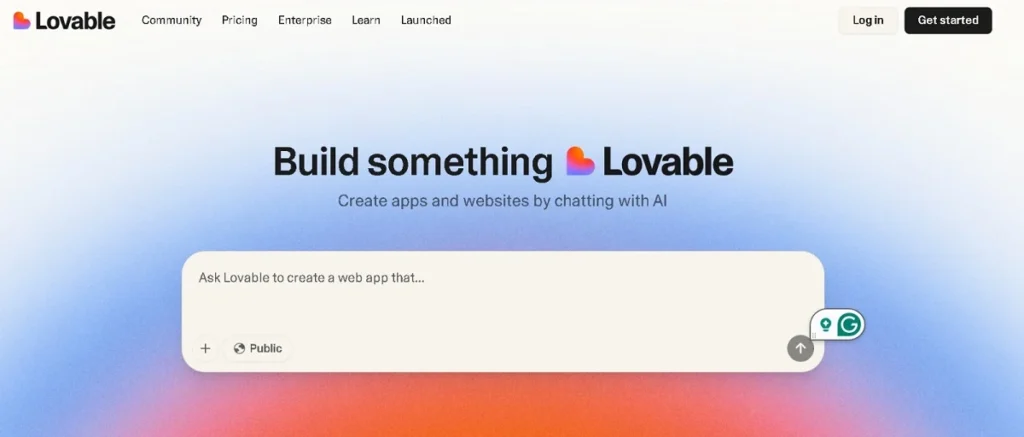
Lovable prioritizes speed over scale. It helps teams validate ideas quickly and avoids pulling them into complex structure, SEO decisions, or long term maintenance planning.
The Strength of Lovable for MVPs
Lovable shines when teams need to move fast. It removes complexity and reduces decisions. Layouts are simple. Publishing is quick. You can validate ideas without worrying about long term architecture or performance tuning.
For early stage products, this speed is often more important than flexibility.
The Limitations That Appear Over Time
As products mature, expectations shift.
Teams want better control over content structure. SEO needs become more granular. Landing pages grow longer and more detailed. Performance optimization becomes proactive instead of reactive. Integrations start to feel limited rather than helpful.
At this stage, Lovable still works exactly as intended. The issue is not the platform. The issue is that the product has moved beyond the MVP phase.
When workarounds become routine, it is usually a sign that the foundation needs to evolve.
Move From Lovable to WordPress Without Slowing Growth
When your product outgrows MVP tools, structure, SEO, and performance start to matter. Seahawk helps teams convert Lovable sites into scalable WordPress builds that support long term content, speed, and growth without disrupting rankings.
Why WordPress Becomes the Logical Next Step
WordPress becomes the logical next step when growth demands more control. It gives teams the flexibility to scale content, fine tune SEO, improve performance, and evolve the site structure without rebuilding everything from scratch.
Ownership and Flexibility
WordPress gives teams full control over how they structure, display, and maintain content. Teams are not locked into predefined layouts or publishing rules, which allows pages to be built intentionally around real user journeys instead of platform constraints.
This flexibility becomes crucial as teams experiment with messaging, onboarding flows, and conversion paths.
SEO and Content Expansion
WordPress was built around content. From metadata control to URL structure, internal linking, schema, and performance tuning, SEO can be handled at a granular level.
Blogs, documentation, feature pages, and long form resources can live together in one structured system. This makes WordPress especially valuable once organic traffic becomes a growth channel rather than an afterthought.
Performance and Hosting Freedom
With WordPress, hosting choices are flexible. Performance optimizations can be implemented proactively through caching, image optimization, CDN configuration, and server level tuning.
Instead of reacting to performance limitations, teams can plan for growth and traffic spikes.
Signs You are Ready to Move from Lovable to WordPress
Many teams hesitate because they think migration is a drastic step. In reality, readiness shows up through small daily frustrations.
- You want to add more content, but structuring it feels awkward.
- Design changes require compromises rather than improvements.
- You start caring about SEO details, but customization options feel shallow.
- You notice performance issues, but realize you have little control over how things are optimized.
Integrations work, but only up to a point.
These signals usually appear gradually. Once they stack up, WordPress becomes less of an upgrade and more of a necessity.
How Lovable and WordPress Differ at a Structural Level
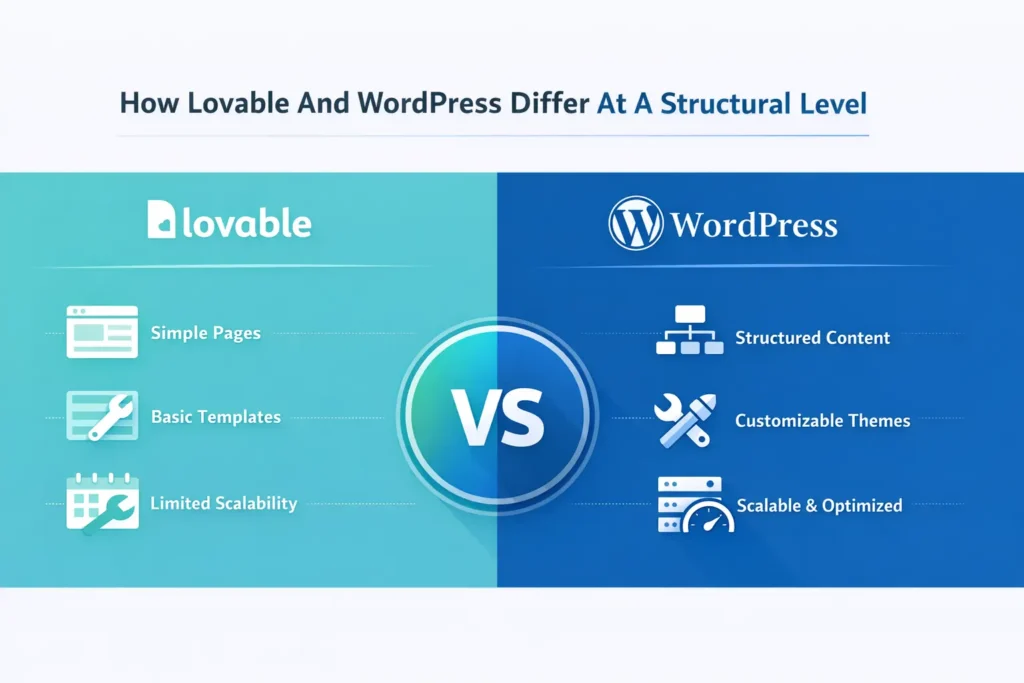
Understanding how the two platforms differ helps teams migrate with realistic expectations rather than assumptions.
Content Structure Comparison
Lovable focuses on straightforward page publishing. This works well for small sites but becomes limiting as content grows. WordPress is built around structured content. Pages, posts, custom post types, and reusable blocks allow content to scale without becoming messy.
This structure makes it easier to manage blogs, documentation, feature pages, and landing pages in one system without overlap or confusion.
Design and Template Control
Design in WordPress is template driven. Themes define layout logic, while templates and blocks control how content appears across the site. This allows teams to maintain consistency while still creating unique page experiences where needed.
Instead of forcing content to fit predefined layouts, WordPress adapts layouts to support content goals.
Long Term Maintenance and Scaling
WordPress is designed to evolve. New sections can be added without redesigning the entire site. Integrations can grow alongside the product. Performance optimizations can be layered in over time.
This makes WordPress suitable not just for where the product is today, but where it will be six months or two years from now.
Step By Step Lovable to WordPress Conversion Process
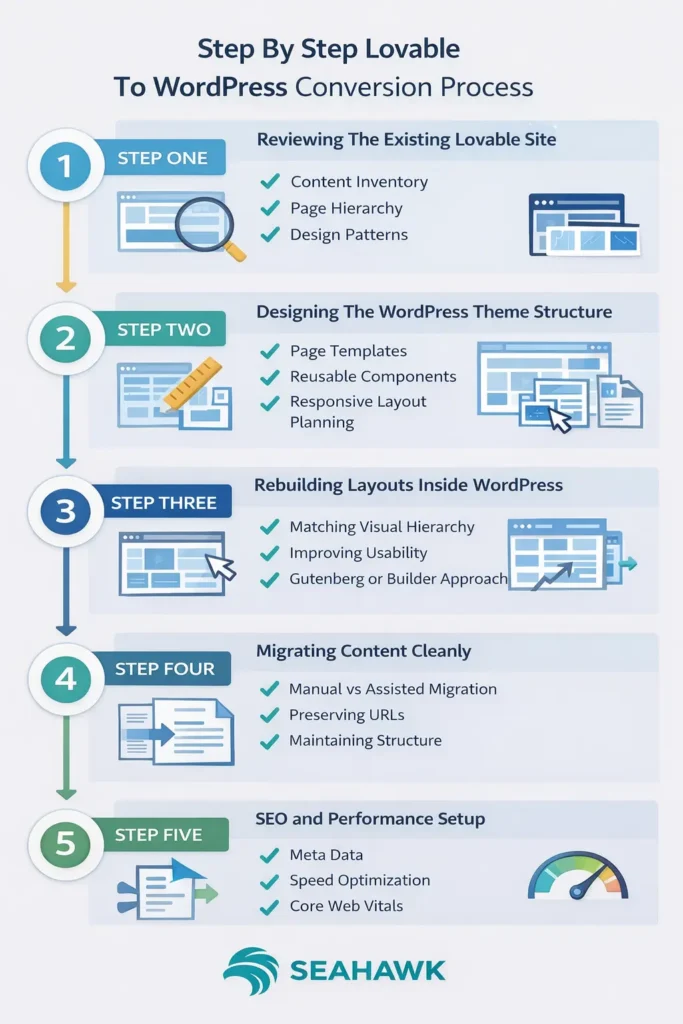
A successful Lovable to WordPress conversion is not about rushing to rebuild pages. It starts with understanding what needs to scale, what can remain simple, and what should be improved during the move.
Step 1: Reviewing the Existing Lovable Site
Every migration begins with a clear audit. Teams review pages to understand structure, messaging, and user flow. They map content to decide what to migrate as is, what to refine, and what to retire.
This approach prevents clutter from carrying over and helps the new WordPress site start clean and intentional.
Step 2: Designing the WordPress Theme Structure
Before any content is rebuilt, the theme structure is planned. This includes page templates, reusable sections, and layout logic. The goal is to create a flexible system rather than one off designs.
Planning the structure early avoids redesign work later and makes future updates easier for internal teams.
Step 3: Rebuilding Layouts Inside WordPress
Teams rebuild layouts using the WordPress block editor or a selected builder based on project needs. They preserve visual hierarchy while improving usability where it matters most.
This is where teams can refine spacing, readability, and content flow instead of copying limitations from the old setup.
Step 4: Migrating Content Cleanly
Content is migrated carefully to maintain clarity and consistency. URLs are mapped to avoid broken links. Headings, internal links, and media are reviewed to support SEO and accessibility.
This step ensures search engines and users transition smoothly without disruption.
Step 5: SEO & Performance Setup
Once the content is in place, teams apply SEO and performance configurations. They review metadata, optimize page speed, and implement caching strategies to support long term growth.
Instead of reacting to performance issues later, optimization is built into the foundation.
Common Mistakes to Avoid During Conversion
Migration can unlock growth, but only if it is handled thoughtfully.
One common mistake is copying the site exactly as it exists without improving structure. Conversion is an opportunity to refine content and navigation, not freeze old limitations.
Another issue is ignoring SEO mapping. URLs, internal links, and metadata must be planned carefully to avoid traffic drops.
Overloading WordPress with unnecessary plugins is also a risk. Each addition should serve a clear purpose. Simpler setups are easier to maintain and perform better over time.
Skipping performance optimization wastes a key opportunity. WordPress performs best when teams address speed from the start instead of reacting after problems appear.
Can You Improve the Site During Migration
Migration is not just a technical move. It is often the best moment to improve things that have quietly stopped working well.
When teams move from Lovable to WordPress, they gain the chance to rethink how users navigate the site. Teams can reorganize content to match real user journeys rather than historical decisions. They can shorten, expand, or clarify pages based on how people actually read and convert.
Design improvements also fit naturally into this phase. Spacing, typography, and visual hierarchy can be refined without changing the brand identity. Small adjustments often make the site feel more polished and easier to scan.
Accessibility is another area that benefits from migration. Headings can be structured correctly, images can include proper alt text, and interactive elements can be made easier to use across devices.
By treating conversion as an improvement phase rather than a copy exercise, teams often end up with a site that performs better than expected, both for users and search engines.
How Seahawk Handles Lovable to WordPress Conversions
At Seahawk, Lovable to WordPress conversion is approached as a growth focused rebuild, not a simple transfer.
The process starts by understanding where the product is headed. Content goals, SEO priorities, and future expansion plans guide how teams design the WordPress architecture. This ensures the site does not need another rebuild in a few months.
Every conversion includes SEO safe migration practices. Teams map URLs carefully, preserve or improve metadata, and rebuild internal linking to support discoverability and rankings.
Teams treat performance as a foundation, not an afterthought. They make hosting, caching, and optimization decisions early so the site stays fast as traffic grows.
Finally, teams receive a clean WordPress setup that is easy to manage. Templates are reusable. Content updates are straightforward. Ongoing maintenance stays predictable.
Final Thoughts
Choosing when to move from Lovable to WordPress is less about platforms and more about growth readiness.
Lovable supports speed and validation. WordPress supports structure, ownership, and long term scalability. When content, SEO, and performance start driving business outcomes, WordPress becomes the stronger foundation.
A thoughtful conversion respects what worked before while building for what comes next. Done right, it creates momentum instead of disruption.
FAQs About Lovable to WordPress Conversion
Is Lovable to WordPress conversion worth it for small teams?
Yes, if the team plans to grow content, invest in SEO, or needs more flexibility. If speed alone is the priority, Lovable may still be sufficient.
Will SEO rankings drop after migration?
When handled correctly, rankings are preserved and often improve. Careful URL mapping, metadata review, and performance optimization are critical.
How long does the conversion process usually take?
Simple MVP sites can be migrated in a short timeframe. More complex sites require additional planning but benefit from better long term stability.
Can the design look exactly the same?
The visual identity can remain consistent. However, migration is often a chance to improve usability and content clarity rather than copy limitations exactly.