Website migration SEO impact is often underestimated. Broken redirects, lost metadata, and crawl errors can trigger ranking drops that take months to recover from.
Most migrations do not fail due to malicious intent. They fail because of missed steps. This guide covers exactly how website migration affects your SEO and what you need to do before, during, and after to protect your rankings.
TL;DR
- Website migration can cause ranking drops, traffic losses, and indexing failures if not carefully planned.
- The biggest risks are broken redirects, lost metadata, crawl errors, and slow page speed on the new site.
- Most migrations see traffic fluctuation for 4 to 8 weeks while Google processes the changes.
- High-risk migrations include domain changes, CMS switches, and URL structure overhauls.
- Planning before launch and monitoring after go-live are the two things that protect your SEO the most.
A website migration is any significant change to your site’s domain, URL structure, platform, or architecture that affects how search engines crawl and index your content. Not all migrations carry the same risk. A hosting move with no URL changes is low risk. A full domain change or CMS switch with new URL structures is high-risk and requires careful planning to avoid lasting SEO damage.
Why Do Website Migrations Cause Traffic Drops and Ranking Losses?
When you change URLs, switch platforms, or rebuild your site structure, search engines temporarily lose their understanding of your website. You will see this show up as ranking drops, traffic loss, and pages disappearing from search results.
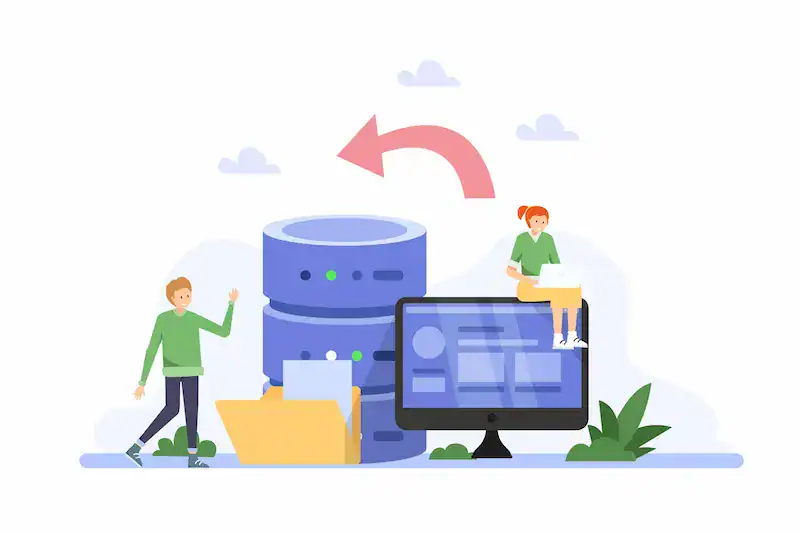
Here is what most often causes it.
- Broken 301 Redirects: Every backlink pointing to your old URLs becomes worthless without a proper redirect. You lose the authority you worked hard to build.
- Lost Metadata and Schema: Your titles, meta descriptions, and schema markup often get wiped during migration. Without these signals, search engines cannot understand your new pages, and your rankings fall fast.
- Crawl Errors After Launch: A misconfigured robots.txt file, a forgotten noindex tag, or a broken sitemap can prevent Google from crawling your new site entirely.
- Slower Page Speed: New templates and hosting setups frequently slow your site down after migration. Page speed is a direct ranking signal and a slow site costs you both rankings and users.
The Biggest SEO Risks by Migration Type
Not every migration carries the same level of risk. The SEO impact depends on the changes, how many there are, and how well you plan before you go live. Here is how each migration type affects your search rankings.
Domain or Rebrand Migration
When you change your domain, search engines treat your new site as a completely different entity. Every ranking signal, backlink, and trust score your old domain built needs to transfer through precise 301 redirects. One missed redirect results in permanent loss of authority for that URL.
This migration type demands the most preparation. A complete redirect map, a Google Search Console change of address request, and close post-launch monitoring all play a role. Even when everything goes smoothly, some ranking fluctuation is normal for several weeks while Google processes the domain change.
CMS or Platform Migration
Switching from one CMS to another often changes your URL structure by default. When URLs change without a proper redirect map in place, rankings drop for every affected page. The risk level depends entirely on how well old URLs are mapped to new ones before launch.
Many businesses underestimate this migration type because the content stays the same. But search engines rank specific URLs, not content. If the new platform generates different URL formats without proper mapping, rankings can drop even though the content itself has never changed.
Website Redesign Migration
A redesign appears to be a low-risk migration, but it carries hidden SEO risks. Changing site structure, removing pages, or altering content without updating internal links can quietly damage rankings. The more that changes at once, the higher the risk.
Separating the technical migration from the design changes is the safest path forward. Moving the site first and confirming rankings are stable before rolling out design updates makes it much easier to spot and fix any problems that come up.
Hosting Migration
Moving to a new host without changing URLs is the lowest-risk migration type. However, a new server setup can slow the site down, cause temporary downtime, or affect how quickly Google recrawls pages. Speed and uptime during the transition still matter for rankings.
A slow server response time on a new host can trigger a drop in Core Web Vitals scores even if nothing else has changed. Checking page speed in the new hosting environment before going live and confirming that caching and CDN are set up correctly helps avoid post-migration performance issues.
Planning a Website Migration Without Losing SEO?
Protect your rankings, traffic, and site structure with expert migration support that keeps your website move smooth and search-friendly.
What You Must Do Before You Migrate to Protect Your SEO?
The work you do before migration day determines how well your site holds its rankings after launch. Most SEO damage from migrations occurs when steps are skipped during preparation, not because the migration itself went wrong.

Here is what needs to happen before you touch anything on your live site.
- Crawl and Document Every Live URL: A full crawl of your existing site gives you a complete record of every page, title tag, meta description, and internal link. This becomes your reference point for everything that follows.
- Benchmark Rankings, Traffic, and Core Web Vitals: Record your current performance before migration to establish a clear baseline for comparison after launch. Without it, you have no way to know what changed or what caused a drop.
- Map Old URLs to New URLs: Each old URL must have a confirmed destination on the new site before a single redirect goes live. This is the most critical step in any migration and the one most often rushed.
- Identify Your Highest Value Pages: Some pages drive most of your traffic, leads, and backlink equity. These pages need extra attention and should be the first ones tested and verified after launch.
- Set Up a Staging Environment: Testing the full migration on a staging site before going live lets you catch redirect errors, broken pages, and performance issues without risking your live rankings.
How to Execute the Migration Without Losing Rankings?
Execution is where most migrations go wrong. The planning was solid, but something got missed on launch day, and rankings started dropping within weeks. Here is what needs to happen correctly during the migration itself.
Setting Up 301 Redirects
Every old URL needs a direct 301 redirect pointing to its equivalent new page. More importantly, redirect chains where one URL redirects to another, which then redirects to another, dilute link equity and slow down crawling. A clean one-to-one redirect map applied before launch is the most reliable way to protect the authority your old pages built.
That said, not every old URL will have a clear equivalent on the new site. In those cases, redirecting to the most relevant page available is far better than sending traffic and link equity to a 404 page, which is one of the most common and costly migration mistakes.
Preserving Metadata, Schema, and Canonical Tags
Beyond redirects, metadata is the next thing that needs careful attention. Titles, meta descriptions, schema markup, and canonical tags all need to carry over to the new site exactly as they were. Losing these signals forces Google to relearn your entire site from scratch, slowing recovery and increasing ranking volatility.
On top of that, the canonical tags on the new site should point to the new URLs, not the old ones. A canonical tag pointing to a redirected or nonexistent URL can confuse search engines and quietly suppress rankings long after launch.
Handling XML Sitemaps and robots.txt on Launch Day
Once redirects and metadata are confirmed, the next priority is your sitemap and robots.txt. The new XML sitemap should include only live, indexable pages and be submitted to Google Search Console on launch day. A sitemap containing redirected, noindexed, or broken URLs sends mixed signals to Google and slows down the crawl of your new site.
Just as importantly, the robots.txt file on the staging site blocks crawlers by design. Carrying that same file over to the live site is one of the most damaging launch day mistakes possible. Before switching DNS, confirming that the live robots.txt is fully open to crawling is essential.
Keeping Core Web Vitals Stable After Migration
Even after a clean technical launch, performance issues can still surface. New templates, hosting environments, and third-party scripts frequently affect page speed in ways that only become visible after going live. A site that passed Core Web Vitals before migration can fail after launch simply because the new setup loads resources differently.
To avoid this, running speed tests in the staging environment before launch provides a clear picture of any performance issues that need to be fixed first. Beyond that, caching, image optimization, and CDN configuration on the new hosting setup all need to be verified early so that a performance drop does not become a rankings problem after the site goes live.
How Long Does SEO Recovery Take After a Website Migration?
SEO recovery takes time, and the timeline depends on how much has changed. For straightforward migrations, rankings typically stabilize within 4 to 8 weeks. Full domain changes or CMS switches can take 3 to 6 months before things settle.

The speed of recovery depends on how quickly Google recrawls your site. Sites with strong backlink profiles recover faster. Monitoring Google Search Console daily and fixing crawl errors promptly significantly shortens the recovery window.
What to Monitor in the 30 to 90 Days After Your Migration Goes Live?
The first 90 days after launch are the most critical window for catching and fixing issues before they cause lasting SEO damage. Here is what to keep a close eye on during this period.
- Crawl Errors and 404 Spikes: Check Google Search Console regularly for sudden increases in crawl errors or 404 errors. These need to be fixed as soon as they appear.
- Rankings and Traffic Against Your Baseline: Compare your current performance against the benchmark you recorded before migration. Any unexpected drops point to something that needs investigation.
- Redirect Chains From Launch: Some redirect chains slip through even with careful preparation. Identifying and cleaning them up early prevents unnecessary loss of link equity.
- Core Web Vitals on the New Setup: Page speed and performance can shift after migration. Monitor your Core Web Vitals scores on the new hosting environment and fix any regressions quickly.
- AI Visibility Alongside Traditional Rankings: AI-driven search systems cite and summarise content differently from traditional search. A migration can affect both, so tracking your visibility across AI search results matters just as much as tracking Google rankings.
Common Website Migration Mistakes That Kill SEO
Even well-planned migrations run into problems. Most SEO damage comes from a small number of avoidable mistakes that get overlooked under the pressure of launch day.
- Applying Redirects After Launch: Redirects need to be live before the site goes public. Applying them afterward means Google crawls broken URLs first, and that damages rankings faster than most people expect.
- Leaving Noindex Tags From Staging: Staging sites block crawlers by design. Carrying those noindex tags to the live site tells Google to ignore your entire website, and rankings disappear almost immediately.
- Changing URL Structure and Design at the Same Time: Combining both changes makes it nearly impossible to identify what caused a ranking drop if something goes wrong. Separating them keeps the process manageable and diagnosable.
- Skipping Mobile Performance Testing: A new build can perform well on desktop but break on mobile. Since Google uses mobile-first indexing, poor mobile performance directly affects your site’s ranking.
- No Post-Migration Monitoring Plan: Going live without one means problems go undetected for weeks. By the time you notice a traffic drop, the damage is already done.
Conclusion
Website migration affects your SEO more than most people realize, but the damage is preventable. A well-planned migration that covers redirects, metadata, crawl settings, and post-launch monitoring gives your site the best chance of maintaining its rankings during the transition and recovering quickly if any fluctuations occur.
The businesses that come out of a migration with stable or improved rankings are the ones that treat it as an SEO project, not just a technical one. Plan carefully before launch, monitor closely after, and fix issues as soon as they appear.
FAQs
Does website migration always hurt SEO?
Not always. A well-planned migration with proper redirects, preserved metadata, and close post-launch monitoring can go through with minimal ranking impact. Most SEO damage occurs from missed steps, not the migration itself.
How long does SEO recovery take after a website migration?
Migrations typically recover within 4 to 8 weeks. More complex migrations involving domain changes or full CMS switches can take 3 to 6 months before rankings fully stabilize.
What is the biggest SEO risk in a website migration?
Broken or missing 301 redirects are the biggest risk. Without them, every backlink and ranking signal your old URLs have built up is lost permanently.
Do 301 redirects pass full link equity to the new URL?
301 redirects pass most link equity to the new URL, but there is typically a small loss of authority in the transfer. Clean one-to-one redirects with no chains minimize that loss.
Should I migrate my website and redesign it at the same time?
Doing both at the same time significantly increases risk. If rankings drop, it becomes very difficult to identify the cause. Separating the technical migration from the design changes makes the process much safer and easier to manage.
How do I know if my migration damaged my SEO?
A sudden drop in organic traffic, a spike in crawl errors in Google Search Console, or pages disappearing from search results in the weeks after launch are the clearest signs that something went wrong during the migration.