
Launching a WordPress website often feels like the finish line. The site goes live, the final invoice is sent, and everyone moves on. But for most clients, that launch is actually the beginning of new questions, new issues, and new expectations.
A few weeks later, the emails start coming in. The site feels slow. A plugin update breaks a form. Spam shows up in the inbox. Suddenly, the project that was supposed to be done keeps pulling you back in.
This is where WordPress website care changes everything. Website care plans are not just about updates and backups. They create continuity. They keep you involved after launch in a way that feels supportive instead of reactive. More importantly, they transform one time projects into long term relationships built on trust, consistency, and shared responsibility.
In this guide, we will explore how WordPress website care plans strengthen client relationships, reduce friction, and create recurring revenue without aggressive selling.
Why WordPress Websites Need Ongoing Care After Launch
WordPress websites are living systems. Even when nothing changes visually, things are constantly happening behind the scenes. Plugins release updates. WordPress core evolves. Hosting environments shift. Security threats grow more sophisticated.
Without ongoing care, small issues quietly pile up until something breaks.
Clients often assume that once a site is live, it will continue running smoothly on its own. They do not see the moving parts that keep it stable. They only notice when something stops working.
Website care exists to handle those moving parts before they turn into visible problems. Regular updates prevent compatibility issues. Backups protect against data loss. Performance checks keep load times under control. Security monitoring reduces the risk of hacks and spam.
When you provide website care, you remove uncertainty for the client. They no longer wonder who is responsible when something goes wrong. They already know. It is you.
That clarity alone strengthens the relationship.
What Clients Usually Do Not Expect After Launch
Most clients are surprised by how much maintenance a WordPress site actually needs. Clients often expect updates to be harmless, assume plugins will always work together, and believe hosting alone takes care of security.
When reality proves otherwise, frustration builds quickly.
Without a care plan in place, every issue feels urgent and unplanned. From the client’s perspective, problems appear out of nowhere. From your perspective, you are constantly pulled into fire fighting mode.
Website care plans reset expectations early. They explain that maintenance is normal, ongoing, and handled proactively. Instead of reacting to problems, clients feel protected from them.
Turn Website Care Into Long Term Client Trust
Keep client sites secure, fast, and stable after launch with proactive updates, monitoring, and support. Seahawk Website Care Plans help you reduce emergencies and build relationships that last.
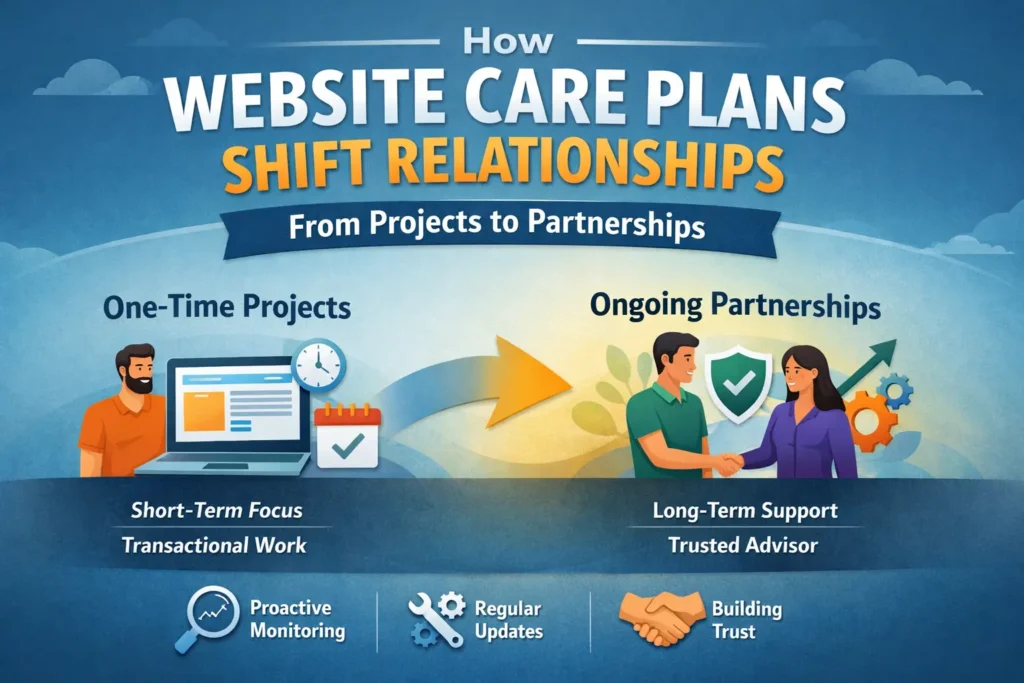
How Website Care Plans Shift Relationships From Projects to Partnerships
One of the biggest changes website care brings is how clients see you.
Without a care plan, your role often ends at delivery. You are the person who built the site. After that, communication slows down unless something breaks.
With a care plan, your role continues. You become the person responsible for keeping the site healthy. That ongoing responsibility naturally builds trust.
Clients stop seeing your work as a finished product. They start seeing it as a service that evolves with their business. Regular updates, reports, and check ins create steady touchpoints that strengthen the relationship over time.
This shift also changes how conversations happen. Instead of only talking during emergencies or redesigns, you stay connected through routine care. That consistency makes future conversations about improvements, strategy, and growth feel natural instead of sales driven.
Why Retainer Style Relationships Feel Safer to Clients
Retainers provide predictability. Clients know what they are paying for and what they can expect in return. There are no surprise invoices or awkward conversations about hourly rates.
From a client perspective, a care plan feels like insurance. There is clear accountability, ongoing monitoring, and someone ready to step in if something goes wrong.
That sense of safety builds loyalty. Clients are far more likely to stay with an agency that feels reliable than one they only hear from when a new project starts.
Designing Website Care Plans That Clients Actually Value
A strong website care plan is not about listing every technical task you perform. It is about solving real problems in a way clients understand.
The most effective plans are simple, outcome focused, and clearly structured. Clients should immediately understand what they are getting and why it matters.
Instead of overwhelming them with technical language, frame your care plan around results. Faster load times. Fewer errors. Better security. Peace of mind.
Operationally, standardized plans also protect your time. When every client has a custom setup, scaling becomes difficult. Clear packages allow you to deliver consistent quality without reinventing your process each time.
Create Simple Tiered Plans
Tiered plans make decision making easier. Clients can choose the level of support that matches their needs without feeling confused.
A basic plan might focus on updates, backups, and security monitoring. A higher tier could include performance optimization, content updates, or reporting. The key is clarity.
Each tier should feel complete, not like something important is missing. That builds confidence and reduces friction during onboarding.
Align Services With Real Client Pain Points
Clients rarely care about plugin names or version numbers. They care about outcomes.
What clients really want is simple. A site that loads quickly, stays online, processes forms properly, and stays protected from hacks and spam.
Your care plan should speak directly to those concerns. Explain how ongoing updates prevent crashes. Explain how monitoring catches issues early. Also, explain how backups protect their business.
At Seahawk, website care plans are designed around these real world concerns. The focus stays on stability, security, and performance rather than technical noise.
Communication is the Real Product of Website Care
Maintenance work often happens quietly. When things are working well, clients may not notice anything at all. That is why communication is so important.
Clients do not just pay for tasks. They pay for reassurance.
Clear communication turns invisible work into visible value. It reminds clients that their site is being actively cared for, even when nothing appears broken.
The goal is not to overwhelm them with data. It is to show presence, accountability, and consistency.
How to Share Updates Without Overwhelming Clients
Monthly summaries work well for most clients. Keep them short and clear.
Instead of listing every update, focus on impact. Mention that software updates were applied to keep the site secure. Highlight uptime stability. Note any performance improvements.
This keeps clients informed without forcing them to understand technical details they do not need.
Turning Maintenance Work Into Relationship Touchpoints
Care plans create natural moments to check in.
A quick note about a resolved issue. A suggestion to improve performance. A heads up about an upcoming update. These small touchpoints build familiarity and trust.
Over time, clients stop seeing you as a vendor and start seeing you as a partner who looks out for their website.
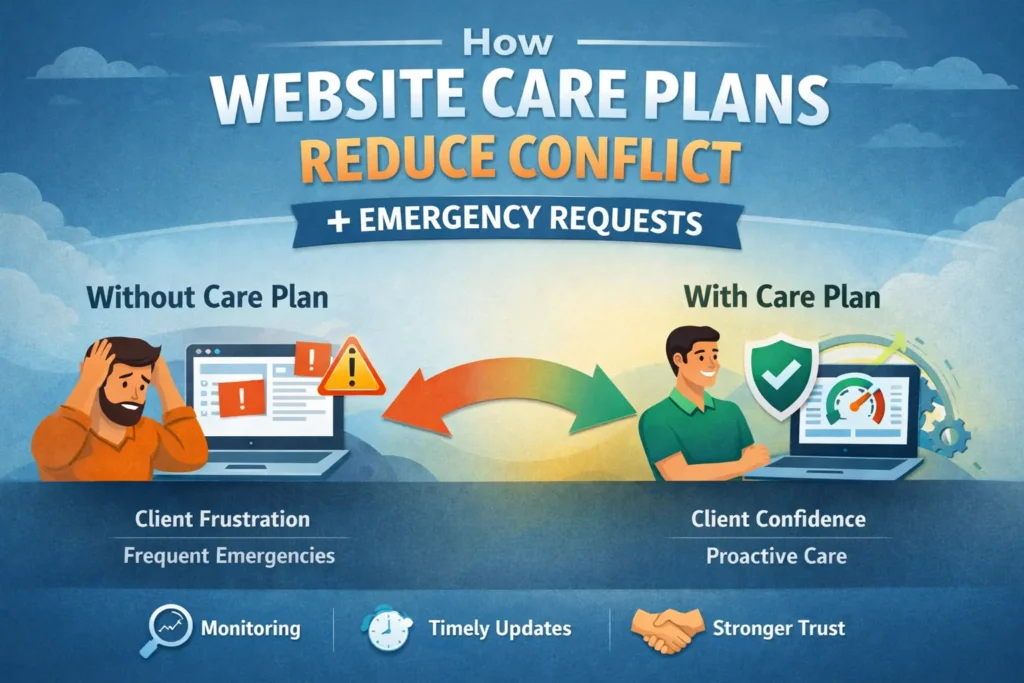
How Website Care Plans Reduce Conflict and Emergency Requests
One of the biggest hidden benefits of website care plans is how much tension they remove from client relationships.
Without a care plan, every issue feels urgent. A plugin update fails, the site slows down, or a form stops working and the client immediately reaches out in panic. The conversation often starts with frustration because there was no shared expectation around responsibility or response time.
Website care plans change that dynamic completely.
When clients know their site is actively monitored, issues feel manageable instead of alarming. They trust that problems will be caught early or handled quickly. Instead of asking “what happened,” they ask “can you take a look,” which is a very different tone.
This shift leads to fewer emotional conversations and more productive ones. Care plans turn emergencies into routine tasks, and routine tasks rarely cause conflict.
Preventing the Who Broke My Site Conversation
Blame usually appears when responsibility is unclear. Without ongoing care, it is never obvious who caused an issue or when it started.
With monitoring and regular updates, you can see exactly what is happening on the site, from recent changes to performance slowdowns or uptime issues.
That clarity protects the relationship. Conversations become factual instead of emotional, and clients feel reassured rather than defensive.
Pricing Website Care Plans Without Undervaluing Your Work
Pricing is where many agencies struggle. It is tempting to keep care plans cheap so clients say yes. But underpricing often leads to resentment, rushed work, and strained relationships.
A care plan should reflect the responsibility you are taking on. You are not just clicking update buttons. You are safeguarding a business asset.
Clients respond better to confident pricing when the value is clear. When you explain what is included and why it matters, the price feels justified rather than arbitrary.
Avoid positioning care as a discount add on. Present it as a professional service that ensures stability, security, and continuity.
Why Monthly Billing Builds Commitment
Monthly billing aligns with how care plans work. The work is ongoing, and the value compounds over time.
For clients, monthly payments are easier to approve and budget for. There is no large upfront cost and no confusion about when support applies.
For agencies, monthly billing creates predictable revenue. That stability allows you to invest in better tools, better processes, and better support, which ultimately improves the client experience.
How Agencies Deliver Consistent Website Care at Scale
As your client list grows, manual maintenance quickly becomes unsustainable. Logging into each site individually, tracking updates, and writing reports by hand leads to mistakes and burnout.
Scalable website care requires systems, not heroics.
Successful agencies rely on centralized workflows to monitor, update, and report on all client sites from one place. This ensures every client receives the same level of attention, regardless of size.
Consistency is what builds trust at scale. When every client experience feels intentional and reliable, relationships stay strong even as volume increases.
Keeping Quality Consistent Across All Client Sites
Standard processes remove guesswork. Updates follow the same schedule. Backups run automatically. Monitoring stays active across all sites.
This structure allows agencies to respond faster and with confidence. Clients notice the difference when support feels calm, prepared, and professional.
When Website Care Leads to Upsells Without Selling
The best upsells never feel like sales because they start with insight, not intent.
Website care plans give you a long term view of how a site behaves in the real world. You notice patterns that clients cannot see on their own. Pages that load slowly. Traffic that increases but does not convert. Designs that feel dated as the business evolves. Small issues that quietly limit growth.
When you share these observations, the conversation feels supportive. You are not pitching a new service. You are explaining what you are already seeing as the person responsible for the site’s health.
This approach builds credibility. Clients trust recommendations that come from ongoing involvement rather than a one off proposal. As a result, discussions around redesigns, performance improvements, SEO work, or new features happen naturally. The decision to invest feels logical, not pressured, because the trust already exists.
Getting Started With Website Care the Right Way
If you are new to website care plans, simplicity is your advantage.
Start with a small group of existing clients who already trust your work. Introduce a basic plan that covers essentials like updates, backups, security monitoring, and uptime checks. This allows you to test your workflow, refine communication, and understand what clients value most.
Pay close attention to how you explain the plan. Focus on outcomes rather than tasks. Clients respond better to clarity than complexity.
If you already offer care plans, look for friction points. Are packages inconsistent. Is reporting unclear. Are tasks handled manually that could be standardized.
Website care does not need to be complex to work well. Reliability, clear expectations, and consistent follow through matter far more than a long feature list. Start small, improve steadily, and let the process evolve.
Final Thoughts
WordPress website care plans do far more than keep websites online.
After launch, they provide continuity and accountability while keeping relationships active, even when there is no new project on the table. Over time, this steady presence becomes the foundation of trust.
Clients remember who shows up quietly and consistently. They remember who prevents problems instead of reacting to them. That reliability changes how they see you and how much responsibility they are willing to share.
Strong client relationships are not built through big promises. They are built through steady presence. One update. One report. One proactive message at a time.
When done well, website care plans turn agencies into long term partners. And long term partnerships are what drive sustainable growth, repeat work, and referrals that no sales pitch can replace.
FAQs About Website Care Plans
What should a WordPress website care plan include?
A reliable WordPress website care plan should cover regular core, plugin, and theme updates, secure backups, uptime monitoring, and basic security checks. These elements keep the site stable and reduce the risk of unexpected issues. Depending on the client’s needs, care plans can also include performance monitoring, monthly reports, and minor content updates. The goal is not to overwhelm clients with technical details but to ensure their website remains secure, fast, and dependable at all times.
How do website care plans help build stronger client relationships?
Website care plans create ongoing touchpoints after a project is complete. Instead of only hearing from you when something breaks, clients receive consistent updates and proactive communication. This builds trust because clients know someone is actively responsible for their site. Over time, that consistency turns a transactional relationship into a partnership where clients feel supported and confident in your expertise.
Are website care plans worth it for small businesses?
Yes, website care plans are often more valuable for small businesses because they do not have in house technical teams. Regular maintenance helps prevent downtime, security issues, and performance problems that can directly impact revenue. Care plans also give small business owners peace of mind, knowing their website is being monitored and maintained without them needing to manage it themselves.