

Every great app needs a strong foundation. While Lovable makes it incredibly easy to design and launch beautiful applications without deep coding skills, pairing it with a powerful backend can take your project to the next level. This is where Supabase steps in.
Supabase offers an open source backend solution built on PostgreSQL, giving you real time data handling, built in user authentication, secure file storage, and serverless edge functions. By connecting Supabase to Lovable, you give your app the ability to store, manage, and protect data in a way that is both scalable and developer friendly.
Whether you are building a social networking platform, an ecommerce store, a project management tool, or something entirely unique, this integration opens up endless possibilities. You will be able to manage user accounts, control access with precision, sync data instantly across devices, and even implement advanced features like AI powered interactions or automated workflows.
In this guide, we will walk you through the complete process of connecting Supabase to your Lovable project. From setting up your Supabase account to configuring database tables, enabling user authentication, and securing your data, you will learn everything you need to build a modern app that works as beautifully behind the scenes as it does on the surface.
Understanding Supabase – Your Open Source Backend Powerhouse
Before diving into the integration steps, it is important to understand what makes Supabase such a valuable backend for your Lovable project. At its core, Supabase is an open source alternative to Firebase, built on top of PostgreSQL. This means you get the reliability, flexibility, and scalability of a full SQL database without having to manually set up or manage servers.
Supabase goes far beyond basic data storage. It provides real time subscriptions so that changes in your database are instantly reflected in your app. It includes a complete authentication system, allowing you to set up secure login and signup flows in minutes. With file storage, you can upload and serve images, videos, and documents directly through the platform.
One of its standout features is Supabase Edge Functions, which let you run serverless code close to your users. This allows you to implement custom logic, process data, or connect to other services without the cost and complexity of a dedicated server. For developers who want full control, Supabase offers both RESTful and GraphQL APIs generated automatically from your database schema, so you can start building immediately.
What makes Supabase especially appealing for Lovable users is its ease of use. You do not need deep backend expertise to get started. The dashboard is intuitive, and its setup process is straightforward enough that you can have your database, authentication, and storage ready within minutes. When paired with Lovable’s no-code app building capabilities, you end up with a powerful combination of design freedom and backend functionality.
Why Integrate Supabase with Lovable?
Every Lovable app needs a way to handle data securely and efficiently. While Lovable takes care of the front end and user interface, the real magic happens when you connect it to a robust backend like Supabase. This integration bridges the gap between visual app creation and powerful data management, giving you everything you need to launch a production-ready application.
With Supabase connected, your Lovable app can handle essential backend tasks such as user authentication, database setup, file storage, and real time updates. For example, you can create an app that allows users to sign up, upload a profile photo, post content, and see changes appear instantly without refreshing the page. Supabase handles all of that securely in the background while Lovable ensures your app looks and feels professional.
Another reason to consider Supabase integration is scalability. As your app grows, you need a backend that can grow with it. Supabase is built on PostgreSQL, a battle-tested database that supports millions of rows of data, complex queries, and enterprise-level security. This means you can start small and scale without having to change platforms later.
It also opens the door to advanced features. You can use Supabase Edge Functions to implement AI-powered tools, automate data processing, or integrate third-party APIs without managing your own servers. This allows you to build apps that are not just functional but innovative, giving you a competitive advantage in your niche.
When you combine Lovable’s intuitive design environment with Supabase’s backend power, you get a complete app development solution that is fast to build, easy to manage, and ready to scale.
Want a Powerful Backend for Your WordPress Project?
Seahawk’s WordPress development experts can help you build scalable, secure, and high-performing applications, whether you need custom integrations like Supabase or advanced backend features.
Prerequisites Before You Connect Supabase to Lovable
Before starting the Supabase integration process for your Lovable project, it is important to ensure you have the right setup in place. This will make the connection smoother and help you avoid common issues later.
1. A Supabase Account
Sign up for a free Supabase account at supabase.com. This will give you access to the dashboard where you will create your new project, manage your database, and configure settings.
2. A Lovable Project Ready for Integration
Have your Lovable app prepared for backend connection. This could be an existing app you want to enhance with database and authentication features or a new project you are about to launch.
3. Basic Understanding of APIs and Databases
While the process is beginner-friendly, knowing the basics of API keys, authentication, and database setup will help you follow along more confidently.
4. Required Tools Installed (If Using Code-Based Features)
If your Lovable app uses custom client-side code, make sure you have Node.js and npm installed on your system. This will allow you to install the Supabase client library and run commands when needed.
5. A Clear Plan for Your App’s Features
Knowing what you want your app to do will help you set up your database and authentication correctly from the start. Decide if you will need user login, file uploads, real-time updates, or advanced features like Supabase Edge Functions.
Once these prerequisites are in place, you will be ready to move on to the actual integration process and connect Supabase to Lovable step-by-step.
Step-by-Step Guide to Connect Supabase with Lovable
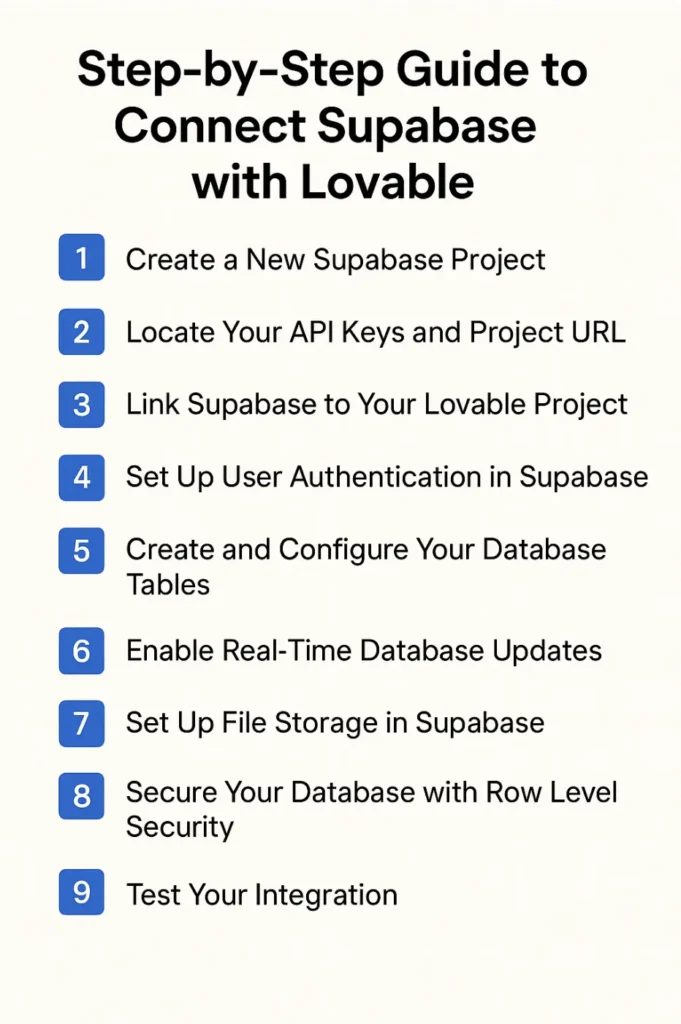
Now that you have your accounts and tools ready, it is time to connect Supabase to your Lovable project. This guide will walk you through the full integration process, from creating your backend to testing your app with real data.
Step 1: Create a New Supabase Project
- Log in to your Supabase account.
- Click the New Project button on your dashboard.
- Select or create an organization.
- Name your project, set a secure password for the database, and choose the closest region for performance.
- Click Create Project and wait for the setup to complete. Supabase will create a PostgreSQL database and prepare your backend in just a few minutes.
Step 2: Locate Your API Keys and Project URL
Once your project is ready, navigate to Project Settings > API.
Here, you will find:
- Project URL – The base endpoint for your API requests.
- Anon (Public) Key – Used for client-side requests.
- Service Role Key – For server-side operations that require full access.
Keep these safe and never expose sensitive keys publicly.
Step 3: Link Supabase to Your Lovable Project
In your Lovable app editor:
- Open the integration or backend settings panel.
- Choose Supabase from the available integrations.
- Input your Project URL and Anon Key from Supabase.
- Save your settings. Lovable will confirm when the connection is successful.
Step 4: Set Up User Authentication in Supabase
- In the Supabase dashboard, go to Authentication > Settings.
- Enable the sign-up methods you want, such as email/password or social logins (Google, GitHub, Facebook).
- For social providers, add the required client IDs and secrets.
- In your Lovable project, add login and sign-up forms or use Lovable’s built-in authentication UI.
Step 5: Create and Configure Your Database Tables
- In Supabase, open the Table Editor.
- Click New Table and give it a name (for example, tasks or users).
- Add the necessary columns such as id (UUID), title (text), completed (boolean), and user_id (foreign key linked to the auth.users table).
- Save your table.
- Use the SQL editor for more advanced schema modifications if needed.
Step 6: Enable Real-Time Database Updates
- Open the Database section in Supabase.
- Ensure real-time replication is enabled for your tables.
- In your Lovable project, subscribe to changes so data updates instantly for all users without refreshing the page.
Step 7: Set Up File Storage in Supabase
- In the Supabase dashboard, go to Storage.
- Create a new bucket (for example, avatars or uploads).
- Configure it as public or private depending on your needs.
- Add upload functionality in your Lovable app so users can submit files directly to Supabase storage.
Step 8: Secure Your Database with Row Level Security (RLS)
- In the Table Editor, select your table.
- Enable Row Level Security.
- Create policies to control who can read or write data.
- Example: Only allow a user to read their own rows.
- Test policies to ensure data protection.
Step 9: Test Your Integration
- Create a test user account and log in through your Lovable app.
- Add data to your database and confirm it appears in Supabase.
- Test real-time updates by opening the app in two tabs.
- Upload files and verify they are stored in the correct bucket.
Best Practices for a Smooth Supabase–Lovable Integration
Following the basic connection steps is only part of the process. To ensure your Lovable app runs reliably and securely with Supabase, it is important to adopt a few best practices from the start.
Keep Your API Keys Secure
Never share your service role key publicly or store it in the client-side code. Use environment variables or Lovable’s secure storage options for sensitive credentials.
Use Row Level Security from Day One
Enable RLS as soon as you create your database tables. This prevents accidental exposure of data and ensures users only have access to their own information.
Test Your Integration Frequently
After each major update to your Lovable project or Supabase setup, run tests for authentication, database reads and writes, file uploads, and real-time updates. This helps you catch and fix issues early.
Optimize Your Database Queries
Design tables and indexes based on the way your app retrieves data. Well-structured queries and indexing improve performance, especially as your database grows.
Leverage Supabase Edge Functions for Advanced Features
Edge Functions allow you to run custom logic without managing a server. You can process data, interact with third-party APIs, or add AI features directly from the backend.
Back Up Your Data Regularly
Supabase offers automated backups, but you can also export your database manually for added safety. Having a backup strategy ensures you can recover quickly from unexpected issues.
Common Issues and How to Troubleshoot Them
Even with a smooth setup, it is normal to encounter small issues when connecting Supabase to Lovable. Knowing how to identify and fix these problems will save you time and frustration.
Authentication Not Working
If users cannot log in or sign up, first check the authentication settings in your Supabase dashboard. Make sure the selected providers (email/password or social logins) are enabled and properly configured. If using social logins, verify that the client IDs and secrets are correct.
Database Connection Errors
If your Lovable project cannot access the database, double check the Project URL and Anon Key you entered in the integration settings. Ensure these values match exactly with the ones in the Supabase API settings. Also confirm that Row Level Security policies are not unintentionally blocking access.
File Uploads Failing
When file uploads do not work, check that the correct storage bucket exists in Supabase and that your Lovable app is pointing to it. Make sure the storage permissions allow the desired action, and confirm that files are within size limits.
Real-Time Updates Not Showing
If your app is not reflecting changes instantly, verify that real-time replication is enabled for your tables in Supabase. Also check that your Lovable project is subscribing to the correct events for the right tables.
Slow Performance
If queries or updates are taking too long, review your database structure. Adding indexes to frequently searched columns and optimizing queries can significantly improve speed.
Final Thoughts – Launching Your Lovable App with Supabase Power
Connecting Supabase to Lovable transforms your app from a simple front-end project into a full-featured platform with secure data storage, real-time updates, and scalable backend capabilities. With Supabase handling authentication, database management, file storage, and edge functions, you can focus more on creating engaging user experiences in Lovable.
The best part is that this integration works for projects of all sizes. Whether you are building a personal side project, a startup MVP, or a large-scale SaaS product, Supabase and Lovable give you the tools to build fast, launch confidently, and scale without unnecessary complexity.
If you follow the steps and best practices outlined in this guide, you will have a stable, secure, and feature-rich app ready for your users. The combination of Lovable’s no-code interface and Supabase’s open source backend means you can move quickly while still maintaining professional standards in performance and security.
Helpful Resources:
- https://9498c9cc-9df2-4dc0-9c58-bcd13e01aeb2.cc09.conves.io/tech/lovable-dev-review/
- https://9498c9cc-9df2-4dc0-9c58-bcd13e01aeb2.cc09.conves.io/tech/figma-to-lovable/
- https://9498c9cc-9df2-4dc0-9c58-bcd13e01aeb2.cc09.conves.io/tech/lovable-pricing-plans-features-cost/
- https://9498c9cc-9df2-4dc0-9c58-bcd13e01aeb2.cc09.conves.io/compare/wordpress-vs-lovable-website-builder/
- https://9498c9cc-9df2-4dc0-9c58-bcd13e01aeb2.cc09.conves.io/design/build-logo-design-projects-lovable/
- https://9498c9cc-9df2-4dc0-9c58-bcd13e01aeb2.cc09.conves.io/tech/minimum-lovable-product-vs-mvp-guide/
- https://9498c9cc-9df2-4dc0-9c58-bcd13e01aeb2.cc09.conves.io/tech/build-discord-server-directory-lovable/
- https://9498c9cc-9df2-4dc0-9c58-bcd13e01aeb2.cc09.conves.io/tech/use-lovable-ai-to-make-money/
- https://9498c9cc-9df2-4dc0-9c58-bcd13e01aeb2.cc09.conves.io/design/export-figma-designs-into-lovable/
- https://9498c9cc-9df2-4dc0-9c58-bcd13e01aeb2.cc09.conves.io/tech/lovable-vs-cursor/
- https://9498c9cc-9df2-4dc0-9c58-bcd13e01aeb2.cc09.conves.io/tech/can-lovable-make-mobile-apps/
- https://9498c9cc-9df2-4dc0-9c58-bcd13e01aeb2.cc09.conves.io/compare/builder-io-vs-lovable/
- https://9498c9cc-9df2-4dc0-9c58-bcd13e01aeb2.cc09.conves.io/compare/lovable-vs-bolt/
- https://9498c9cc-9df2-4dc0-9c58-bcd13e01aeb2.cc09.conves.io/compare/replit-vs-lovable/
- https://9498c9cc-9df2-4dc0-9c58-bcd13e01aeb2.cc09.conves.io/agency/lovable-ai-alternatives/