Modern WordPress development is evolving at a remarkable pace. Micro-frontends in WordPress, powered by Gutenberg blocks, are reshaping how teams plan, build, and scale complex websites.
This approach breaks large frontend applications into smaller, independently managed components that work together to deliver a seamless experience.
Large development teams are quickly adopting this model to move faster and build smarter. When combined with Gutenberg‘s block-based editor, micro-frontends unlock new levels of flexibility, performance, and team autonomy for WordPress projects of any scale.
TL;DR: Modular Frontends Meet Block-Based WordPress
- Independent UI modules replace a single, tightly coupled codebase, making large sites easier to manage
- Gutenberg blocks are naturally modular, making them ideal for a decoupled frontend strategy
- Teams gain faster release cycles, better scalability, and significantly cleaner codebases
- Success depends on consistent design systems, clear module boundaries, and robust deployment pipelines
Understanding Frontends in WordPress and Gutenberg Block
WordPress has gone through a fundamental transformation over the past several years. The classic PHP-based monolithic theme gave way to a block-based system that treats every content element as a discrete, configurable component.
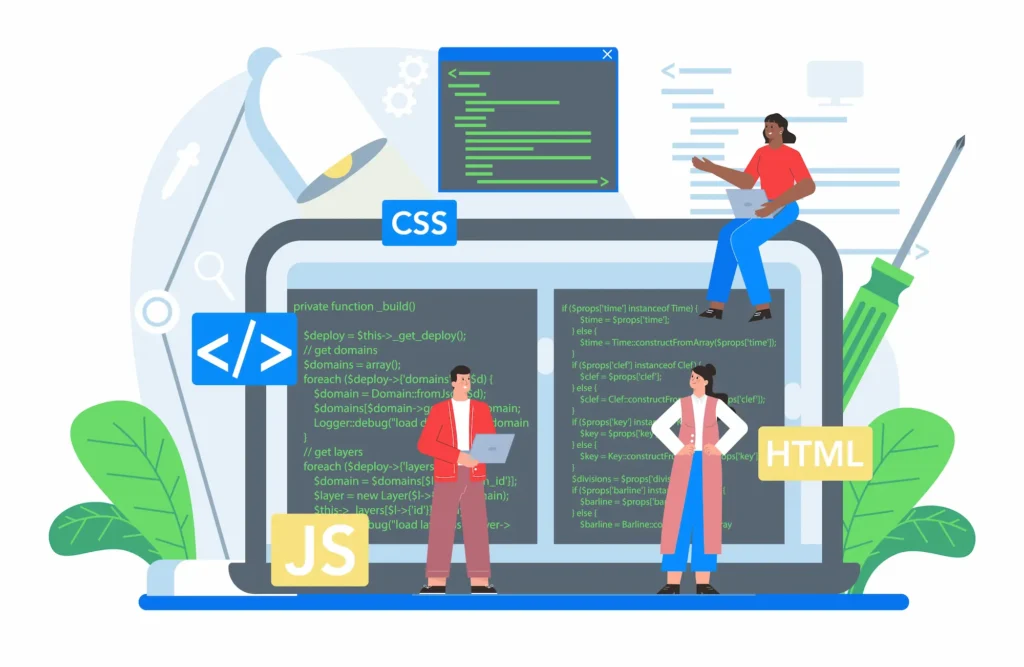
Understanding this shift helps developers see exactly why micro-frontends integrate so naturally into modern WordPress workflows.
Traditional Monolithic Frontend vs Micro-Frontend
A traditional monolithic WordPress frontend is one large, tightly coupled system. Themes, templates, scripts, and styles all live in a single codebase.
A change to one part risks breaking another. Scaling this type of architecture is slow and requires careful coordination across the entire project.
Micro-frontend architecture flips this model entirely. Instead of one massive codebase, the frontend is broken into smaller, independently owned, and separately deployed modules.
Each module handles a specific part of the user interface. Teams develop, test, and ship each module on its own timeline and with its own tools.
This decoupled model closely mirrors the principles behind WordPress decoupled architecture, where the frontend and backend operate as distinct, independently managed layers connected through APIs.
What Are Gutenberg Blocks in WordPress Development?
Gutenberg is the default WordPress block editor. It replaced the classic editor in WordPress 5.0 and treats every content element, paragraphs, images, buttons, forms, and custom layouts, as an individual block with its own settings and behavior.
Developers can create custom blocks in WordPress using JavaScript and React. Each block is self-contained, allowing teams to build rich, complex layouts without touching unrelated areas of the codebase.
How Gutenberg Blocks Align with Micro-Frontend Principles?
Gutenberg blocks and micro-frontends share several core principles. Both embrace modularity and encourage component isolation. Both allow separate teams to develop, maintain, and update pieces without impacting the rest of the system.
A Gutenberg block encapsulates its own markup, styles, and scripts. This is precisely what a micro-frontend module does at the UI layer.
The block editor already pushes developers to think in terms of reusable, composable components. Extending this thinking to the broader site architecture creates a natural, well-supported foundation for micro-frontend development in WordPress.
Scale WordPress Sites with Micro-Frontend Expertise
Transform your website with modular, high-performance WordPress development powered by Gutenberg and modern architecture.
What Are Micro-Frontends: Architecture, Concepts, and Use Cases
Micro-frontends apply microservice principles to the frontend of a web application. Instead of one large user interface, teams build small, loosely coupled UI applications, each owned by a different team and deployable on an independent schedule.
These modules communicate through well-defined interfaces. A host shell application composes them into a unified user experience. End users never see the separation; they interact with one coherent product.
Common use cases include large editorial platforms, enterprise portals, multi-team SaaS products, and complex e-commerce websites.
Any project where multiple development teams contribute to a single frontend is a strong candidate for micro-frontend adoption.
Top Benefits of Using Micro-Frontends in WordPress
Discover how micro-frontends with Gutenberg blocks enhance scalability, accelerate development, and deliver flexible, high-performance WordPress experiences.

Improved Scalability for Large WordPress Websites
Monolithic frontends hit a wall when traffic grows or teams expand. Micro-frontends scale horizontally. Each module can be optimized, cached, and deployed separately without affecting the others.
This works particularly well for high-traffic WordPress sites that require consistent uptime under variable load. For sites handling enterprise-level traffic volumes, this architecture removes the bottlenecks that traditional setups create.
It aligns naturally with load balancing solutions for high-traffic websites, where distributing workloads across multiple resources prevents single points of failure and maintains performance under pressure.
Faster Development and Deployment Cycles
In a monolithic system, deploying a single bug fix can require testing and releasing the entire frontend. Micro-frontends eliminate this constraint.
Teams deploy only the modules they own. A team working on a Gutenberg-based navigation block ships updates without waiting for the team managing a product listing block to complete their sprint.
This independence cuts deployment time dramatically. It also reduces the risk of deployment-related regressions, since each release covers a narrow, well-understood scope.
Enhanced Team Autonomy and Collaboration
Large WordPress projects commonly involve multiple development teams. With a monolithic frontend, every team must coordinate around shared code. This slows everyone down and introduces unnecessary dependencies.
Micro-frontends give each team full ownership of their module. One team manages the header. Another handles the content feed.
A third owns the checkout flow. Each team defines its own tooling within its module boundary. This autonomy reduces friction, improves output quality, and reflects how enterprise WordPress web agencies successfully structure large-scale development across distributed teams.
Better Code Maintainability and Modular Architecture
A clean, modular codebase is dramatically easier to maintain over time. Micro-frontends enforce this by design. Each module has a clear scope and a defined responsibility. Developers know exactly where to look when bugs appear.
Gutenberg blocks reinforce this pattern at the content layer. When combined with nested block structures, developers can build flexible, reusable content components that are easy to update without side effects.
Technical debt naturally decreases because isolated modules can be refactored or replaced without affecting the rest of the system.
Technology Flexibility and Multi-Framework Integration
Different teams have different strengths and preferences. One team may prefer React. Another might favor Vue.js or vanilla JavaScript.
In a monolithic frontend, everyone must work within the same stack. This often leads to compromises that slow teams down.
Micro-frontends remove this constraint. Teams choose the tools that best suit their module. You can use different JavaScript frameworks within the same WordPress site, as long as each micro-frontend exposes a clearly defined interface.
This flexibility becomes especially powerful when exploring a React frontend with a WordPress backend or adopting a full WordPress with Next.js setup for performance-critical frontend modules.
Improved Performance with Optimized Block Loading
Not every block needs to load on every page. Micro-frontends enable lazy loading of modules, meaning only the blocks required for the current page are fetched from the server. Everything else remains dormant until it is needed.

This reduces initial page load time and improves the first meaningful paint. Core Web Vitals scores improve as a direct result.
Combined with performance-focused WordPress development practices, micro-frontend optimization becomes a genuine competitive advantage in search engine rankings and user engagement.
Independent Updates Without Breaking the Entire Website
One of the biggest risks in traditional WordPress development is the cascade effect. A failed plugin update or theme modification can bring down the entire frontend. Micro-frontends address this problem directly.
Each module is isolated from the others. A broken update in one block does not affect anything else on the site. Teams can roll back individual modules without touching unrelated components.
This resilience is particularly valuable in enterprise headless WordPress environments, where downtime directly translates into business losses.
Enhanced User Experience with Dynamic Gutenberg Blocks
Dynamic Gutenberg blocks render content on demand. They fetch data via the REST API or GraphQL and display it in real time. When built as micro-frontend components, these blocks deliver rich, interactive user experiences without bloating the global codebase.
Teams can build highly performant, accessible block components using tools like Bento within the WordPress block editor. Users benefit from smooth, application-like interactions while developers maintain clear ownership and isolation across the frontend.
Easier Migration and Incremental Modernization in WordPress
Not every team has the time or budget to rebuild a WordPress site from scratch. Micro-frontends enable incremental modernization. Teams migrate one section at a time while the rest of the site continues operating normally.
This mirrors the successful strategy behind a Divi-to-Gutenberg migration. Rather than a full rewrite, teams gradually replace individual sections.
Each replacement adopts the new micro-frontend architecture, slowly transitioning the entire site to a modern, scalable, and maintainable system.
How to Implement Micro-Frontends in WordPress Using Gutenberg Blocks?
Implementing micro-frontends in WordPress requires a deliberate plan. The following steps provide a practical starting point.
- Define module boundaries: Identify which sections of the website should be split into independent modules. Common candidates include the header, navigation, product listings, comment sections, and footer components.
- Register each block as a standalone plugin: Each Gutenberg block should live in its own plugin directory. This keeps codebases separate and enables independent version control and deployment for every module.
- Use the Block API for communication: WordPress provides filters, hooks, and the
wp.datastore to allow blocks to communicate without tight coupling. Define clear contracts between modules that share data.
- Apply WordPress GraphQL development for data fetching: GraphQL allows each block to request exactly the data it needs, preventing over-fetching and improving performance across all micro-frontend modules.
- Use Webpack Module Federation for runtime composition: Module Federation enables JavaScript modules from separate builds to be loaded and shared at runtime. This is the most widely adopted technique for composing micro-frontends in browser environments.
- Test each module independently: Set up unit, integration, and end-to-end tests for each block plugin. Isolated testing prevents regressions and confirms that each module behaves correctly before deployment.
You can also translate design assets into structured blocks using a Figma-to-Gutenberg conversion workflow, helping maintain visual consistency from prototype to production across all micro-frontend modules.
Best Practices for Using Micro-Frontends in WordPress Projects
Follow proven strategies to build scalable, consistent, and high-performing micro-frontend architectures in WordPress using Gutenberg blocks.

Maintain Clear Boundaries Between Micro-Frontend Modules
Avoid shared state unless it is absolutely necessary. Each module should manage its own state internally. Shared dependencies should be declared explicitly to prevent version conflicts. Keeping modules decoupled prevents the cascade failures that micro-frontends are specifically designed to eliminate.
Ensure Consistent Design Systems Across Gutenberg Blocks
Micro-frontends can easily fragment the visual experience across a site. Use a shared design token library or a centralized theme.json system to enforce consistent typography, spacing, and color across all Gutenberg blocks. Many of the best WordPress block plugins include structured design systems that teams can use as a foundation for this type of consistency.
Optimize Performance and Reduce Frontend Payload Size
Load only what each page actually requires. Apply code splitting and lazy loading within each micro-frontend module. Compress assets and serve them through a CDN. Pair these techniques with WordPress speed optimization plugins to systematically handle server-side caching and asset minification across all modules.
Implement Robust Communication Between Micro-Frontend Components
Modules occasionally need to share information. Use a central event bus or the WordPress wp.hooks system to emit and listen for events without creating direct references between modules.
This approach preserves the independence that makes micro-frontends valuable in the first place. For complex data sharing, treating WordPress as a headless CMS provides a clean API layer that all modules can consume independently without coupling directly to each other.
Focus on SEO Optimization with Micro-Frontends and Gutenberg
Micro-frontends can hurt SEO if not implemented carefully. Server-side rendering ensures search engines receive fully rendered HTML. Use structured data markup within each Gutenberg block.
Manage canonical URLs and metadata centrally, even when individual blocks are deployed as separate modules. The approach taken by the Block Editor for WordPress VIP projects demonstrates how semantically correct, structured blocks directly support enterprise-level SEO strategies and improve search engine crawlability.
Use CI/CD Pipelines for Independent Deployment
Each micro-frontend module should have its own build and deployment pipeline. Implementing WordPress continuous integration and deployment practices makes this achievable even for large teams. Automated testing and deployment pipelines validate each module before it reaches production, reducing human error and making releases predictable.
Challenges of Micro-Frontends in WordPress and How to Overcome Them
Micro-frontends are powerful, but they introduce real complexity. Understanding the common challenges helps teams prepare effectively.
- Increased architectural complexity: Managing multiple codebases, pipelines, and deployment strategies demands strong DevOps capabilities. Invest early in shared documentation, tooling, and clear module ownership standards to keep overhead manageable.
- CSS conflicts and style bleed: When multiple teams contribute styles independently, visual inconsistencies emerge. Use scoped CSS-in-JS, CSS Modules, or BEM naming conventions. WordPress’s
theme.jsonprovides a useful enforcement layer for global style rules shared across all blocks.
- Shared dependency management: Multiple blocks using different versions of the same library can cause runtime conflicts. Establish a clear shared dependency strategy and use Webpack Module Federation to expose shared packages from a central host application.
- Performance overhead from excessive modules: Loading too many micro-frontends on a single page increases JavaScript bundle sizes. Measure page performance regularly. Apply granular lazy loading and prioritize above-the-fold modules to keep initial load times fast.
- Cross-module integration testing: Testing interactions between independently deployed modules is more complex than testing a monolith. Invest in contract testing and end-to-end testing frameworks that simulate real user workflows across module boundaries.
Micro-Frontends and the Future of WordPress Development
WordPress is moving in a direction that supports micro-frontend architecture at every level.
- Recent WordPress releases have extended block-based thinking beyond content into global site templates, style variations, and full-site editing. Every element of a WordPress site is becoming a composable block.
- The growing ecosystem of headless WordPress development tools, APIs, and frameworks further accelerates this trajectory.
- Teams are already building fully decoupled WordPress setups where the frontend is entirely separate from the CMS backend. Micro-frontends extend this philosophy within the Gutenberg editor itself, applying it at the component level.
- As more teams weigh decisions like React vs WordPress for their frontend stack, micro-frontends offer a practical and sustainable bridge.
WordPress remains the content engine and editorial backbone. Modern JavaScript frameworks power individual modules where performance and interactivity demand it.
The result is a hybrid architecture that combines WordPress’s proven editorial strengths with the speed and flexibility of contemporary frontend development.
Tooling around micro-frontend composition for WordPress will continue to mature. Pattern libraries, module registries, and shared block design systems will make this architecture more accessible to teams at every scale.
Conclusion
Micro-frontends with Gutenberg blocks offer genuine, measurable value for teams building complex WordPress websites.
They improve scalability, shorten deployment cycles, and give development teams the autonomy they need to ship quality work without constant coordination.
The natural alignment between Gutenberg’s block-based model and micro-frontend principles makes WordPress a strong platform for this architectural approach.
However, micro-frontends are not the right fit for every project. Small sites or single-developer builds may find the added complexity unnecessary.
The benefits scale directly with team size, site complexity, and the frequency with which different parts of the site need to be updated independently.
For large teams building enterprise-grade WordPress platforms, the investment in a micro-frontend architecture pays dividends over time. The result is a faster, more maintainable, and more resilient website, one that can grow, adapt, and evolve alongside the business it supports.
FAQs: Using Micro-Frontends in WordPress
What are micro-frontends in WordPress?
Micro-frontends split the frontend into smaller, independent modules. In WordPress, you can achieve this using Gutenberg blocks or decoupled architectures. Each block or component works independently, enabling faster, more flexible development.
How do Gutenberg blocks support micro-frontends?
Gutenberg blocks follow a modular approach. Each block acts like a self-contained UI component. Developers can build, update, and reuse blocks independently, which aligns closely with micro-frontend principles.
Are micro-frontends suitable for all WordPress websites?
No. Small websites may not need them. Micro-frontends work best for large, complex, or enterprise-level WordPress projects where multiple teams manage different features.
Do micro-frontends improve website performance?
Yes, when implemented correctly. They load only the required components instead of the entire frontend. This reduces unnecessary code and improves page speed and user experience.
What are the main challenges of using micro-frontends in WordPress?
They can increase complexity. Managing multiple modules, shared dependencies, and communication between components requires careful planning. However, strong architecture and best practices can solve these issues.