Your coaching website is working around the clock, even when you are not. It is the first thing potential clients see before they ever book a call, read a testimonial, or explore your programs. In 2026, coaching website design has moved well beyond clean layouts and nice fonts. The best coaching websites now combine personal branding, conversion strategy, AI-powered tools, and a user experience that builds trust in seconds.
This guide covers the top coaching website design examples and the trends shaping what actually works right now, so you can build or refurbish a site that attracts more coaching clients and converts them consistently.
A good coaching website builds trust quickly and turns visitors into paying clients by clearly explaining who you help, how you help, and the results clients can expect.
It uses strong social proof such as testimonials and case studies and has a mobile friendly design that works on every device.
It also makes it easy for visitors to book a call or explore your programs without friction so the site can generate leads around the clock.
Why Coaching Website Design Matters?
In the coaching world, your website is often your first impression, and in 2026, that first impression happens in seconds.

Builds Trust and Authority
A professional, modern design instantly creates credibility. Visitors need to feel they can trust you with their personal growth or business goals. Showcasing your certifications, client testimonials, and a confident coaching style on your website gives people the assurance they need to move forward.
Converts Visitors into Leads or Clients
With smart design and clear CTAs, your site becomes a conversion tool. Whether you’re offering coaching sessions, free resources, or paid offers, a well-planned site guides potential clients smoothly from browsing to booking.
Things like lead magnets, email marketing, and contact forms can all help grow your list and secure paying clients.
Showcases Services, Credentials, and Testimonials Effectively
Great coaching websites communicate your value. Highlight your coaching programs, share success stories, display your credentials, and give people a feel for your coaching journey.
This transparency not only supports personal branding but also encourages commitment from new clients.
Supports Personal Branding and Content Marketing
Your website is your digital brand. With tools like blogs, podcast episodes, or videos, you can establish your expertise and help visitors explore your unique approach.
Whether you’re a life coach, mindset coach, or business strategist, your content can nurture leads, support email subscribers, and promote upcoming events, all while deepening the personal connection with your audience.
Ready to Launch Your Own High-Converting Coaching Website?
With Quicksite by Seahawk, you can get a professionally designed site live in just 7 days at $699.
Key Elements of a High-Converting Coaching Website
Whether you’re aiming to inspire confidence, share your message, or grow your impact, here are the essential elements every effective coaching website should include:
Clean, Modern Layout
Your website should reflect professionalism and clarity. A clean, modern layout ensures that nothing distracts your audience from your message. Use whitespace effectively, maintain a visual hierarchy, and choose website templates that are both functional and visually appealing.
Clear Value Proposition Above the Fold
One of the first things visitors see on your homepage is your hero section, where your unique value must shine. Clearly communicate who you help, how you help them, and what transformation they can expect. A strong value proposition builds instant confidence and encourages action.
Easy Navigation and Strong CTA Buttons
Your site should be intuitive. Menus should be straightforward, and buttons like “Book a Session,” “Download Free Guide,” or “Join My Program” should be visible and compelling. CTAs guide website visitors to take the next step in their coaching journey. A well-placed CTA can help convert readers into more clients by removing confusion and streamlining user flow.
Mobile Responsiveness
With most users browsing from their phones and tablets, mobile responsiveness is non-negotiable. Your layout, text, buttons, and forms must work seamlessly across devices. A user-friendly mobile experience helps you reach more people, especially those discovering your coaching services via social media or email.
Testimonials and Case Studies
Sharing success stories, testimonials, or client case studies demonstrates the results of your effective coaching. This not only builds trust but also shows how your business strategy delivers results. Including names or even short videos adds authenticity.
Online Booking System
Make it easy for visitors to schedule coaching sessions directly from your site. An integrated booking tool, like Calendly or Acuity, removes barriers and gives visitors a sense of instant access. It also positions your brand as organized and professional, which helps increase confidence and improve conversions.
4 Deadly Coaching Website Mistakes Designers Want You to Stop Making
Even the most experienced coaches get their websites wrong. As part of putting this guide together, we reached out to four leading website designers and asked them one question: What is the biggest mistake you see coaches making with their websites? Their answers cut straight to the core of why so many coaching sites fail to convert.
Mistake 1: Your Copy Is Not Clear Enough
If a visitor cannot figure out what you do in five seconds, they leave. It is that simple. Your hero section is not the place for clever taglines or vague inspirational copy. It is the place to be specific, direct, and immediately relevant to the person you are trying to reach.
Mistake 2: No Site Strategy Behind the Design
A beautiful website with no strategic flow is just an expensive brochure. Every page needs a clear next step for the visitor, whether that is reading another article, booking a call, or downloading a lead magnet. Design without strategy leaves conversion on the table.
Mistake 3: Too Many Options Competing for Attention
Decision fatigue is real. When visitors face too many choices, they make none. Simplify your homepage to one primary goal, capturing an email address through a relevant lead magnet, and let that relationship develop before you ask for a purchase.
Mistake 4: Not Giving People a Reason to Visit
Content is what brings people to your site in the first place. Without it, you are relying entirely on paid ads or word of mouth. A consistent blog, podcast page, or video library gives search engines something to index, gives visitors a reason to stay longer, and gives you a platform to demonstrate your expertise before anyone spends a single dollar.
Top Coaching Website Design Examples in 2026
Here’s a detailed breakdown of top coaching website design examples in 2026, chosen for their visual appeal, user experience, clarity of message, and ability to convert coaching clients.
Marie Forleo
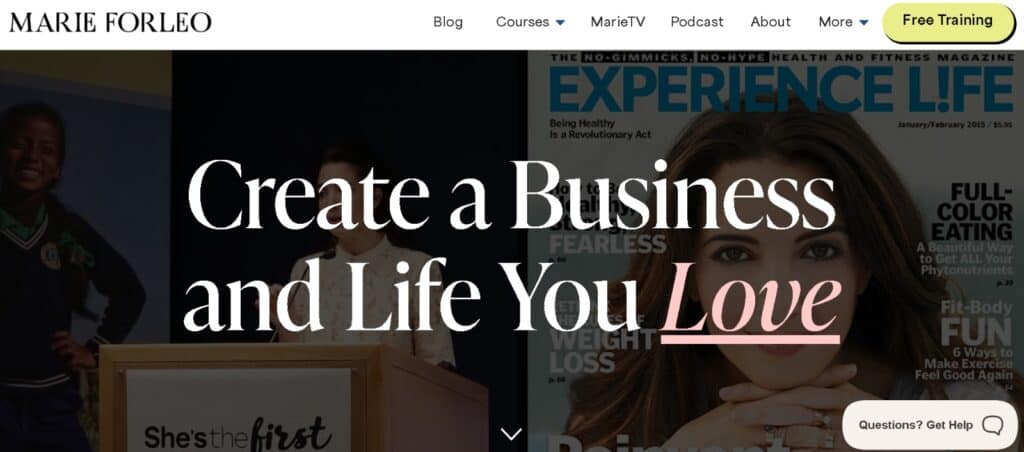
Marie Forleo’s website is a bold, high-energy reflection of her brand. Known for her bestselling books and the “MarieTV” platform, her site is crafted to guide potential clients through her coaching programs and content with ease.
Key Features:
- Eye-catching hero section with high-quality visuals and video content
- Crystal-clear call-to-actions that invite email opt-ins and course sign-ups
- Compelling storytelling and personal messaging that drive emotional connection
- Smooth, user-friendly navigation and fast load times
- Designed to attract more clients through confidence-building design
Jay Shetty
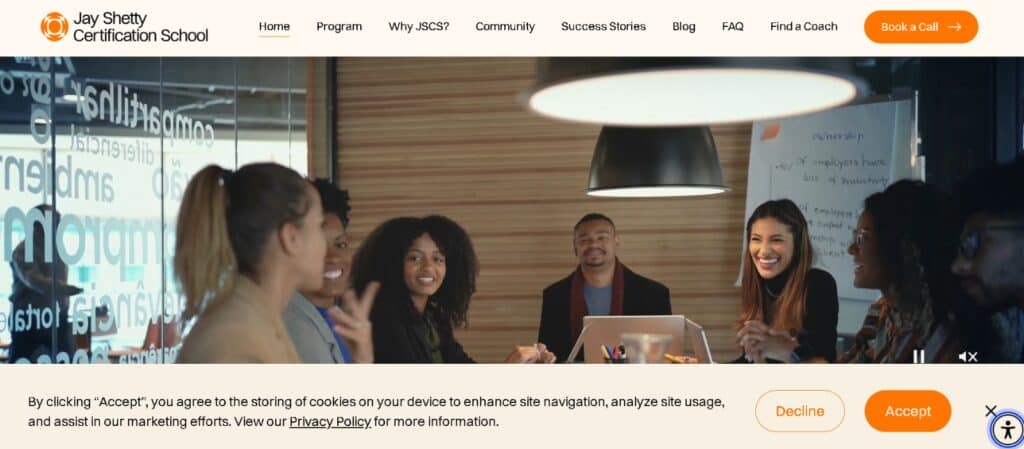
Jay Shetty’s site focuses on relationships, mindset, and personal growth coaching. His use of social proof and seamless content delivery makes it one of the best coaching websites online.
Key Features:
- Professionally shot imagery and a warm, approachable tone
- Built-in lead generation via free masterclasses and email opt-ins
- A clean layout that highlights his coaching services and credentials
- Smart use of testimonials and trust-building elements
- Simple navigation that appeals to his target audience of individuals seeking growth
Mel Noakes

Mel Noakes, a certified wellness coach, presents a calming, minimalist site. It’s a good example of how to align design with coaching style and emotional well-being.
Key Features:
- Soft color palette that aligns with her brand of self-care and health
- Strong testimonial section that adds emotional depth and trust
- Clear layout with an easy path to explore coaching sessions and service resources
- Mobile responsive design optimized for browsing on the go
- Focus on building a personal connection with the visitor
Jason Goldberg
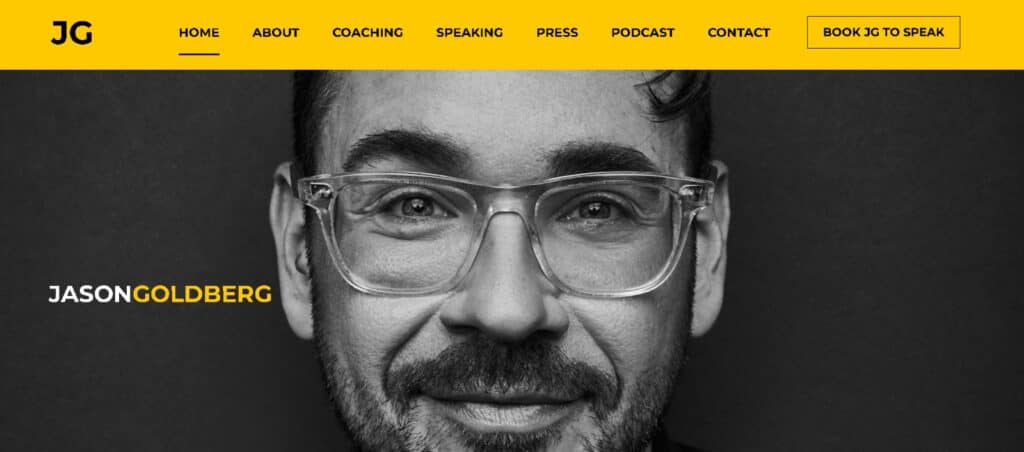
Jason’s coaching website combines fun, confidence, and authenticity. He uses engaging language and interactive elements to draw in website visitors and keep them browsing.
Key Features:
- Playful copywriting that reflects his unique approach
- Scroll-based animations and transitions that enhance UX
- Integration of podcast episodes, blog posts, and videos for added value
- Strong visual identity that makes the brand unforgettable
- Clear CTAs that encourage engagement with his coaching services
Michael Hyatt

Full Focus, founded by leadership coach Michael Hyatt, is team-based but still a blueprint for high-converting websites. It’s ideal for coaches running scalable coaching programs
Key Features:
- Robust product pages designed with conversion in mind
- Integrated booking system and payment tools
- Clean, high-performing web design with a business-centric tone
- Appeals to professionals seeking business strategy and leadership growth
- Strong use of free resources and lead magnets for email growth
Evercoach by Mindvalley
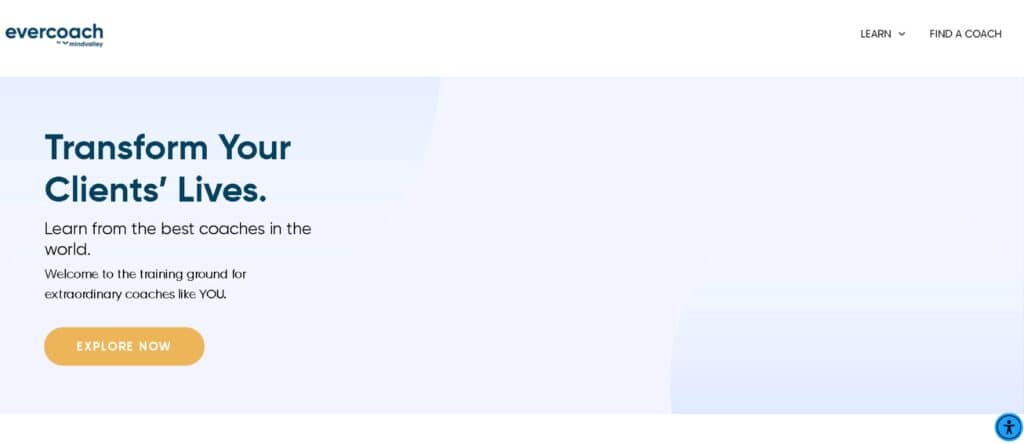
Evercoach is a powerful tool for both aspiring and experienced coaches. It offers not just coaching, but certifications, webinars, and a full library of resources.
Key Features:
- Engaging modern design with bold CTAs and rich visuals
- Seamless navigation across a wide range of offerings
- Micro-interactions and hover animations for a dynamic UX
- Built to attract and serve both clients and coaches
- Includes opt-ins, landing pages, and course access points, all optimized for conversions
Coaching Website Design Trends to Watch in 2026
In 2026, coaching website design is evolving rapidly to meet rising user expectations and the digital habits of today’s coaching clients.
AI-Powered Chatbots and Smart Booking Tools
AI-powered chatbots are now a standard feature on high-converting coaching sites. They guide visitors toward booking coaching sessions in real time, answer common questions about programs and pricing, and qualify leads before a discovery call ever takes place. Smart chatbots and integrated scheduling tools help visitors book coaching sessions instantly, providing real-time answers and improving engagement by offering support around the clock without manual interaction.
Interactive Elements That Qualify and Convert
Quizzes and coaching assessments are now key features of many high-converting websites. These tools increase time on site, help segment leads, and drive engagement, turning curious visitors into paying clients. A well-designed quiz that asks visitors about their goals, current challenges, and coaching readiness does double duty: it creates a personalized experience and delivers pre-qualified leads to your inbox.
Video-First Design and Storytelling
Video continues to dominate coaching website design in 2026. Full-screen video on the homepage draws visitors in before they even start scrolling. Whether it is a welcome message, a client testimonial clip, or a behind-the-scenes look at your coaching process, video communicates authenticity faster than any written copy can. Coaches who use video prominently on their sites consistently report higher engagement and lower bounce rates.
Personal Brand-Focused Design Over Generic Templates
The coaches whose websites stand out in 2026 use a flexible, open-source platform like WordPress with a powerful visual builder, enabling them to build a site that is both beautiful and functional, without compromise. The era of using the same Squarespace template as every other coach in your niche is over. Clients can tell when a site looks generic, and it undermines the trust you are trying to build.
Micro-Animations and Polished Interactions
Subtle hover effects, scroll-triggered animations, and smooth page transitions elevate the user experience without distracting from your content. Micro-animations create a polished, modern look that enhances usability and keeps your site feeling dynamic. These details signal that your brand is current and that you invest in quality, which directly influences how potential clients perceive your coaching programs.
Accessibility and Dark Mode Options
Accessibility is no longer optional in 2026. Coaching websites that offer readable fonts, strong color contrast, dark mode options, and screen reader compatibility reach a wider audience and signal inclusivity. Beyond the ethical case, accessible websites also perform better in search rankings because accessibility improvements directly overlap with technical SEO best practices.
Announcement Bars and Sticky Headers
A top announcement bar promoting free training or lead magnets is a proven conversion technique for coaching websites, as it captures attention before visitors even scroll. Combined with a sticky header that keeps your navigation and primary CTA visible as visitors scroll down the page, these two small design additions consistently improve conversion rates across coaching sites of all sizes.
Tips for Creating or Redesigning Your Coaching Website
Whether you’re launching your first coaching website or refreshing an outdated one, these tips will help you create a strong digital foundation for your coaching journey:
- Define your audience and core message: Before you choose a template or write your homepage, know exactly who you’re speaking to. Whether it’s life coaching, career guidance, or wellness support, your message should speak directly to your target audience’s goals, struggles, and dreams.
- Choose the right platform (WordPress recommended): WordPress remains the top choice for coaching websites due to its flexibility, scalability, and access to thousands of website templates and plugins. It supports integrations, blogging, and SEO optimization, making it ideal for effective coaching.
- Focus on speed, security, and SEO: Use fast hosting, lightweight themes, and caching tools to ensure quick loading times. Install SSL certificates, backups, and security plugins for protection. And don’t forget SEO, optimize your site structure, metadata, and blog posts to attract more clients.
- Use professional design services if needed: A DIY website is fine for starters, but to truly stand out and attract coaching clients, investing in a custom or semi-custom design can boost your credibility.
- Track user behavior and optimize regularly: Use tools like Google Analytics, Hotjar, or CRM dashboards to monitor what’s working. Regular tweaks to layout, copy, and flow will keep your site aligned with your business strategy.
Why WordPress is Ideal for Coaching Website Design?
When it comes to building an effective coaching website, WordPress is the most flexible and scalable platform for coaches in 2026. Whether you’re a certified coach offering life coaching sessions or running group coaching programs, WordPress gives you complete control over your digital presence.
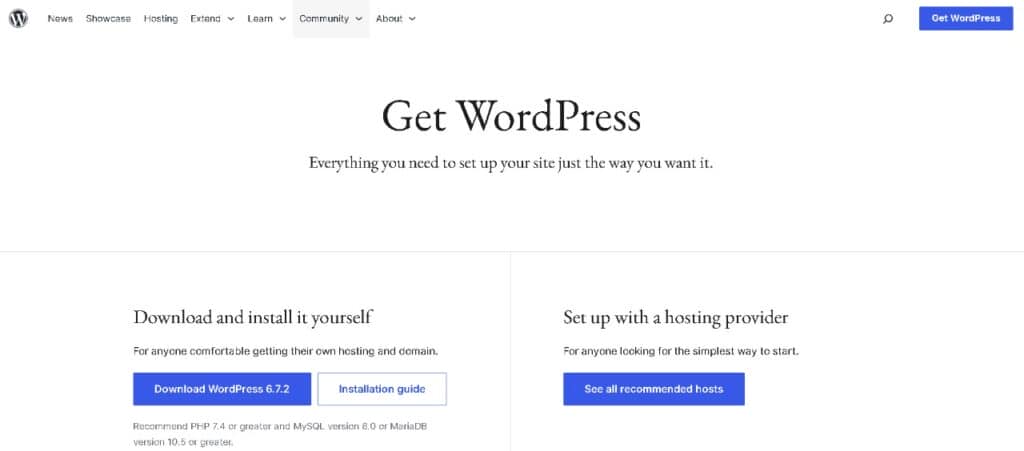
With thousands of themes and plugins, WordPress lets you design a site that reflects your unique coaching style. You can customize every element, colors, fonts, layouts, and features, so your site feels like an authentic extension of your brand. Whether you need lead magnets, blog content, or free resources, WordPress supports it all with ease.
To get the most out of WordPress, consider working with a trusted team like Seahawk. Specializing in WordPress development, Seahawk helps coaches design clean, modern, and conversion-focused websites that align with their business strategy. Whether you’re starting from scratch or need a redesign, Seahawk ensures your site is optimized, mobile-friendly, and built to convert.
Conclusion: Coaching Website Design Examples
A great coaching website in 2026 is not just a digital brochure. It is a conversion system, a trust-building engine, and your most valuable marketing asset. The coaches whose sites consistently attract clients and rank well in search results are those who treat web design as a strategic investment rather than a one-time task. They focus on personal branding, user experience, strong social proof, and technical performance simultaneously, and they keep improving their sites based on real data over time.
If your coaching website is not doing that work for you right now, it is time to change that. The Seahawk Media team builds WordPress coaching websites designed to rank, convert, and grow with your business. Reach out today to get started.
FAQs about Coaching Website Design
What should a coaching website include?
A high-converting coaching website needs a clear value proposition on the homepage, an about page that tells your coaching story, dedicated service or program pages, client testimonials, a contact or booking page, and a blog or resources section for SEO. Each page should have a specific purpose and a clear call to action.
How much does a coaching website cost to build?
The cost depends on your platform and approach. A DIY WordPress site with a premium theme can be built for a few hundred dollars. A professionally designed coaching website typically ranges from $1,500 to $10,000 or more, depending on the complexity, number of pages, and integrations required. Seahawk Media’s Quicksite service gets a professionally designed coaching website live in seven days for $699.
What is the best platform for a coaching website in 2026?
WordPress is the most flexible and SEO-friendly option for coaches who want full control over their site. WordPress supports highly customizable designs, booking plugins, email list integrations, and membership tools, making it the best choice for coaches who want complete control over their digital presence. Kajabi and Paperbell are strong all-in-one alternatives for coaches who want scheduling, payments, and course hosting built into one system.
How do I make my coaching website rank on Google?
Focus on creating dedicated pages for each coaching service you offer, publish regular blog content that answers the specific questions your target clients are searching for, optimize your meta titles and descriptions, build internal links between related pages, and ensure your site loads quickly on mobile. Topical depth and consistent publishing are the two biggest levers for organic search growth on coaching sites.
Do I need a separate landing page for each coaching program?
Yes. A dedicated landing page for each coaching program lets you target specific keywords, speak directly to the audience for that offer, and optimize the page for a single conversion goal. Sending all traffic to a generic homepage dilutes your message and significantly reduces conversion rates.
How often should I update my coaching website?
Your core pages (homepage, about, services) should be reviewed and refreshed at least every six months. Your blog should be updated consistently, ideally weekly or bi-weekly. Beyond content updates, technical maintenance, including plugin updates, security monitoring, and speed checks, should happen monthly.