Growing agencies face constant pressure to deliver more without hiring more. White-label eCommerce development offers a proven model for scaling quickly, cutting operational costs, and serving clients at a higher level. This approach lets agencies outsource complex technical builds while keeping their brand front and center.
The agencies winning today are those using this model to compete at enterprise scale without enterprise-level teams.
White label eCommerce development is a delivery model where a third-party technical team builds online stores, most commonly on WooCommerce or Shopify and agencies deliver that work under their own brand. Agencies typically mark up white label services between 30% and 100%, converting fixed staffing costs into variable, project-based expenses. The model eliminates recruitment timelines entirely. The primary risk is partner quality, poor vetting leads to missed deadlines and client churn.
Overview of White-Label eCommerce Development
White-label eCommerce development is a business model where a third-party development team builds online stores that an agency brands and delivers as its own work. The client never sees the backend partner. The agency maintains the relationship, owns the deliverable, and earns the margin.
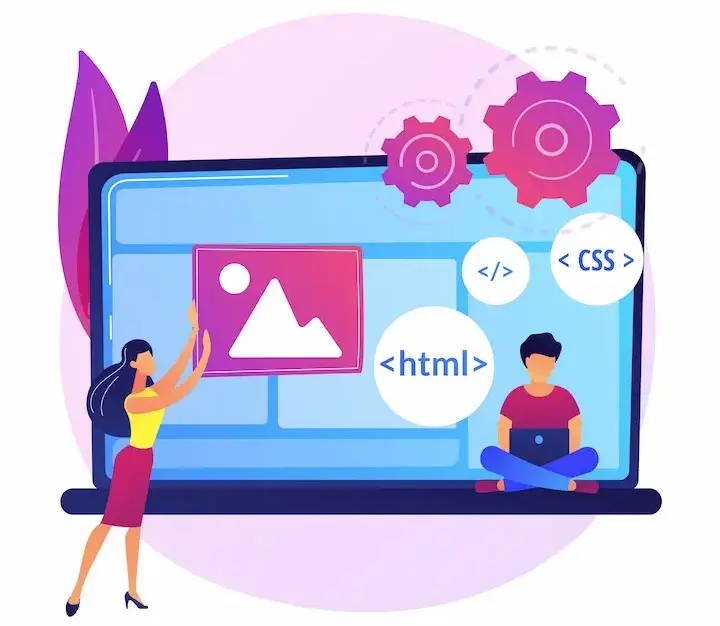
This model works because agencies excel at strategy, client management, and growth consulting. Building and maintaining online stores requires deep technical expertise that takes years to develop.
Partnering with a specialist team immediately fills that gap. Exploring a complete range of white-label eCommerce solutions gives agencies a clear picture of what this model actually covers.
Popular Platforms Used for White-Label eCommerce Projects
Most white-label eCommerce development projects run on WooCommerce or Shopify. WooCommerce powers more than 30% of all eCommerce websites globally. It integrates natively with WordPress and supports unlimited customization.
Shopify is a strong hosted alternative, especially for clients who want a simpler backend experience. Understanding the differences between Shopify and WordPress helps agencies recommend the right platform for each client’s specific goals.
BigCommerce and Magento serve enterprise-level clients who require complex catalog structures, multi-warehouse inventory, and custom checkout logic.
Types of Agencies That Benefit From White-Label eCommerce Services
Digital marketing agencies, SEO firms, and web design studios benefit most from white-label eCommerce development.
These businesses already hold strong client relationships and established brand trust. What they often lack is a dedicated store development team.
Freelancers transitioning into full agencies also gain immediately. They can accept projects that exceed solo capacity without turning away revenue.
Any agency looking to launch new agency services will find eCommerce development among the most in-demand and profitable service lines to add.
Scale Your Agency with White Label Experts
Deliver high quality WordPress and eCommerce solutions under your brand without hiring an in house team.
Why White-Label eCommerce Development Matters for Growing Agencies?
The global eCommerce market is expanding rapidly. Clients expect faster store launches, better mobile performance, and reliable ongoing support. Agencies that cannot meet these demands lose business to competitors who can.
White-label eCommerce development directly bridges the gap between what clients need and what an agency can currently deliver.
It removes the bottleneck created by limited technical capacity. It also creates a clear path from one-time project revenue to long-term retainer relationships.
The best white-label agencies leverage this model to diversify their service portfolios and grow revenue without increasing headcount in proportion.
That combination of growth without overhead is what makes white-label eCommerce development so attractive for ambitious agencies.
Top Benefits of White-Label eCommerce Development
Discover how white-label eCommerce development helps agencies scale services, reduce operational costs, and deliver high-quality online stores faster.
Scale Your Agency Without Hiring More Developers
Hiring developers is slow and expensive. Recruiting, onboarding, and managing full-time staff often takes months. White-label eCommerce development removes that barrier entirely.
Agencies gain access to a ready-made team with exactly the skills each project requires. When client demand spikes, capacity scales immediately. When it slows, there are no idle salaries to carry. Learning how white-label WordPress development helps agencies scale predictably is a key first step for any firm serious about growth.
Reduce Operational and Development Costs
Running an in-house eCommerce team means salaries, benefits, software licenses, and ongoing training costs. These fixed expenses accumulate fast. White-label eCommerce development replaces them with flexible, project-based pricing.
Agencies pay only for completed work. There are no payroll obligations during slower seasons. Analyzing the actual WooCommerce cost for growing stores reveals how much more predictable outsourced development is compared to maintaining permanent in-house developers on fixed contracts.
Access Skilled eCommerce Developers and Technical Experts
Not every agency has access to certified WooCommerce specialists or experienced Shopify developers. White-label eCommerce development connects agencies directly with vetted professionals who work on these platforms every day.
These developers understand payment gateway configuration, custom checkout flows, inventory management systems, and complex third-party integrations. Partnering with expert WooCommerce development services means clients get stores built to convert and perform, not just to look presentable.
Deliver Faster eCommerce Projects With Quick Turnaround Times
Clients want their stores to be up and running as quickly as possible. Every week of delay costs them potential revenue. White-label eCommerce development accelerates delivery through pre-built workflows and experienced execution teams.
An established partner already knows how to set up WooCommerce efficiently, configure payment processors, and manage product data imports.
Agencies can commit to faster project timelines with confidence. Reliable delivery builds deep client trust, which leads to referrals and repeat business.
Expand Your Service Offerings Without Extra Overhead
Agencies currently focused on SEO, content, or design can now add eCommerce as a premium service without a single new hire. White-label eCommerce development enables packaging and selling these services immediately.
This includes advanced capabilities, such as Google Shopping feed optimization for product-heavy stores. Agencies bundle these technical services under their brand and charge accordingly. The overhead stays low while the service value increases significantly.
Focus More on Client Acquisition and Business Growth
When an external team handles technical execution, agency owners and account managers redirect their time toward sales and strategy. That shift in focus is transformative.
Rather than troubleshooting plugin conflicts or debugging checkout errors, agency leaders concentrate on winning new clients and deepening existing relationships.
Agencies planning to start a WordPress development agency the right way, learn this lesson early: strategic focus is the real engine of growth.
Increase Profit Margins With Cost-Efficient Development
White-label eCommerce development typically costs less than equivalent in-house talent. The difference between a partner’s rate and an agency’s client rate becomes pure margin. Most agencies mark up white-label services between 30% and 100%, depending on their market positioning.
That margin is sustainable. Quality remains high. Costs stay controlled. The WooCommerce revenue potential for online stores built on a strong foundation means clients see clear ROI, which justifies premium agency pricing.
Maintain Full Brand Ownership and Client Relationships
White-label eCommerce development partners work invisibly. Clients interact only with the agency. All deliverables carry the agency’s branding, communication, and identity.
This matters strategically. It protects client relationships from any risk of poaching by the development partner. It also reinforces the agency’s identity as a full-service provider capable of complex technical delivery.
Improve Client Satisfaction With High Quality eCommerce Stores
Quality drives retention. When a white label partner builds professional, high-performing stores, clients notice immediately. They experience faster load times, clean mobile checkout flows, and fewer technical issues at launch.
Satisfied clients stay longer and refer their networks. Agencies that extend white-label WooCommerce support after launch keep clients engaged well beyond the initial project. Consistent post-launch quality becomes the agency’s strongest differentiator.
Get Access to Multi-Platform eCommerce Expertise
Clients use different platforms depending on their business model. Some prefer WooCommerce for its flexibility. Others choose Shopify for its managed infrastructure. Enterprise clients often need Magento or BigCommerce for advanced catalog capabilities.
Maintaining in-house expertise across all of these platforms is unrealistic for most agencies. A white-label eCommerce development partner handles them all.
Understanding the Shopify vs WordPress comparison helps agencies guide clients toward the right platform, then hand the build to a team that excels on both.
Handle High Volume Client Projects More Efficiently
Some months bring more project requests than others. Without flexible team capacity, agencies either turn work away or push their staff to breaking point. Both outcomes damage growth.
White-label eCommerce development gives agencies the bandwidth to accept more projects. The partner scales up as the workload increases.
The agency manages client relationships while development runs in parallel. Project volume becomes a strength, not a constraint.
Minimize Project Delays and Resource Bottlenecks
Internal teams stretched across multiple projects simultaneously create delays on all of them. White-label eCommerce development assigns dedicated resources to each project scope.
Delivery is more predictable. Milestones are hit on schedule. Working with experienced white-label WordPress design companies that bring tested project workflows means timelines are set realistically and met consistently.
Offer End-to-End eCommerce Solutions Under Your Brand
Clients prefer agencies that manage the entire process. From store architecture and design to payment gateway integration and post-launch optimization, end-to-end service wins more contracts.
White-label eCommerce development enables exactly this. Agencies package design, development, and maintenance as a single bundled agreement.
Clients get one point of contact. Complex builds like a hybrid WooCommerce store that supports both physical and digital product sales become a standard part of the agency’s service catalog.
Gain Flexibility During Seasonal Workload Spikes
eCommerce is highly seasonal. Black Friday campaigns, holiday product launches, and summer promotions create sudden surges in store build requests. Agencies need to respond fast without scrambling for developers.
White-label eCommerce development provides that surge capacity on demand. Agencies activate additional resources during peak periods and scale back during quieter months. The business stays lean while service quality remains consistent regardless of volume.
Improve Workflow Efficiency With Dedicated White Label Teams
Dedicated white-label teams learn an agency’s communication style, quality standards, and preferred processes over time. Each project becomes more efficient than the last.
Briefing time shortens. Revision rounds decrease. Delivery speeds up. A trusted white-label WordPress agency eventually functions as a true extension of the internal team, one that knows how the agency operates and consistently delivers to those expectations.
Reduce Hiring, Training, and Employee Retention Challenges
Hiring skilled eCommerce developers is one of the most resource-intensive activities a growing agency can undertake. Finding someone who has the right technical skills, fits the culture, and stays long-term is genuinely difficult in competitive hiring markets.
White-label eCommerce development removes this challenge entirely. Trained professionals are available immediately. There are no notice periods, no severance costs, and no institutional knowledge lost to turnover.
Agencies that have attempted hiring WooCommerce developers directly understand exactly how time-consuming and unpredictable that process can be.
Stay Updated With the Latest eCommerce Technologies and Trends
eCommerce platforms evolve rapidly. WooCommerce releases regular updates. Shopify changes its API structure. Payment processors introduce new standards. Security vulnerabilities require fast patches.
White-label eCommerce development partners track all of these changes as part of their core business. Agencies benefit from that continuous learning without investing their own research time. Client stores stay current, secure, and compatible with the latest platform updates.
Enhance Agency Credibility With Enterprise-Level Solutions
Prospective clients often ask whether an agency can handle large, complex projects. Delivering sophisticated eCommerce builds answers that question with real evidence.
White-label eCommerce development enables agencies of any size to access enterprise-grade WordPress development services and deliver them under their own brand. This positions a boutique agency as a serious competitor to much larger firms, without the overhead of a large internal team.
Create Recurring Revenue Opportunities Through Ongoing Support Services
Project revenue is variable. Maintenance and support contracts provide predictable monthly income that agencies can plan and grow around. White-label eCommerce development partners offer these ongoing services as an extension of the initial build.
Clients need plugin updates, continuous performance monitoring, security checks, and feature additions. Packaging these services through a WordPress maintenance agency model creates reliable recurring revenue that compounds over time as the client base grows.
Build Long-Term Agency Growth With Scalable Partnerships
White-label eCommerce development is not a short-term workaround. It is a sustainable growth model. As an agency’s client base expands, a strong white-label partner scales alongside it.
Agencies that use this model consistently outperform those that rely exclusively on in-house teams. Revenue grows faster. Costs scale more slowly. That’s the compounding advantage of building on the right partnerships from early on.
Key Features to Look for in a White-Label eCommerce Development Partner
Partner selection is where agencies succeed or struggle with this model. Start by verifying actual platform expertise. Ask for specific examples of WooCommerce or Shopify builds with measurable performance outcomes.

Security standards matter as much as design quality. A reliable partner consistently applies practices to protect ecommerce sites from hacking, malware injection, and data exposure, especially for stores handling sensitive customer payment data.
Also assess communication processes. Look for structured onboarding, clear revision policies, transparent timelines, and NDA provisions that protect your client relationships throughout the engagement.
White-Label eCommerce Development Use Cases for Agencies
Use cases span every agency type and market segment. A digital marketing agency adds store development to attract retail brands.
An SEO firm bundles product page optimization with its ranking services to increase client contract value. A web design studio offers full end-to-end store launches as a flagship offering.
Agencies serving healthcare clients must account for HIPAA compliance for eCommerce transactions, especially when handling protected health information during checkout. White-label eCommerce development partners with compliance depth to handle these sensitive builds properly.
Agencies can further increase project value by layering Facebook marketing for eCommerce businesses on top of development retainers, creating full-funnel solutions that clients are unlikely to abandon.
Challenges Agencies Can Avoid With White-Label eCommerce Development
Agencies that attempt to build in-house eCommerce capability face predictable problems. Recruitment cycles stretch to months. Training adds more time before any productive output. Turnover wipes out that investment regularly.
Trying to meet client timelines with an overstretched internal team causes missed deadlines. Missed deadlines cause churn.
Churn destroys the agency’s reputation. Partnering with the best WordPress development agencies through a white-label arrangement prevents all of these outcomes from day one.
How to Choose the Right White-Label eCommerce Development Company?
Begin with a clear definition of your client profile. Do they primarily use WooCommerce? Do they need subscription billing, custom checkout flows, or multilingual store support? Match those requirements to potential partners with demonstrated experience in those specific areas.
Review portfolios carefully. Speak with existing partners or clients who have worked with the provider. Test communication responsiveness before committing to any commercial agreement.
Evaluate practical capabilities, too. For example, whether the partner supports customizing the WooCommerce dashboard for end-client usability affects how well clients will be able to manage their stores post-launch.
Start small if possible. Use white-label WordPress to launch new agency services progressively, beginning with one service type before expanding to a full eCommerce suite. This approach reduces risk and builds partner trust through successful early projects.
Future Trends in White-Label eCommerce Development
Artificial intelligence is changing how online stores are built and optimized. AI-powered product recommendations, automated pricing engines, and intelligent inventory forecasting are becoming standard expectations for clients.
White-label eCommerce development partners who integrate these AI capabilities early will deliver stores that are measurably better.
Headless eCommerce architecture is growing fast. This approach decouples the frontend user experience from the backend store logic, enabling much faster page speeds and highly flexible design systems.
Agencies that offer headless WooCommerce or headless Shopify builds through white-label partners will attract performance-focused enterprise clients.
Subscription commerce is expanding across every product category. Clients want recurring billing, loyalty programs, and membership integrations built natively into their stores. White-label eCommerce development teams experienced in these models will become essential agency partners.
Compliance requirements are also tightening globally. PCI-DSS standards, GDPR obligations, and regional data privacy laws demand constant attention. Partners with compliance expertise protect both agencies and their clients as regulations evolve over the next several years.
Conclusion
White-label eCommerce development gives growing agencies a genuine competitive advantage. It reduces development costs, shortens project timelines, and opens revenue streams that would otherwise require significant internal investment to build.
This model works because it aligns with how smart agencies actually grow, through strategic partnerships rather than uncontrolled hiring.
Whether the goal is to serve more clients, improve delivery quality, build recurring revenue, or position the agency for enterprise projects, white-label eCommerce development is the most practical path forward.
Choose your partner carefully. Build the relationship deliberately. Scale your agency with confidence.
FAQs About White-Label eCommerce Development
What is White Label eCommerce Development?
White-label eCommerce development is a service where a third-party development company builds online stores for agencies under the agency’s brand name. The client only interacts with the agency, while the white-label partner handles the technical work behind the scenes.
Why do agencies use White Label eCommerce Development services?
Agencies use white-label eCommerce development to scale faster, reduce hiring costs, and deliver projects without building a large in-house team. It also helps agencies offer more services and manage multiple client projects efficiently.
Which platforms are commonly used in White Label eCommerce Development?
Popular platforms include Shopify, WooCommerce, Magento, BigCommerce, and custom headless commerce solutions. The right platform depends on the client’s business goals, budget, and scalability needs.
How does White Label eCommerce Development help increase agency profits?
White-label partnerships lower operational expenses and reduce recruitment costs. Agencies can take on more projects, improve delivery speed, and increase profit margins without expanding internal resources.
What should agencies look for in a White Label eCommerce Development partner?
Agencies should look for platform expertise, transparent communication, strong project management, NDA protection, quality assurance processes, and reliable post-launch support. A scalable and experienced partner helps ensure long-term business growth.