Agency partnerships can accelerate growth, expand service offerings, and help agencies serve clients more effectively. But a significant number of these collaborations collapse before they deliver real results.
Agency partnership failure is more common than most agencies want to admit, and far more costly than most anticipate. Understanding why agency partnerships fail is the first step toward building stronger, more sustainable working relationships.
Agency partnerships most commonly fail due to unclear goals, poor communication, and undocumented financial agreements. When roles, responsibilities, and decision-making authority are not defined upfront, operational conflicts accumulate and erode the collaboration over time.
Other frequent causes include mismatched company values, inconsistent quality standards, overdependence on a single partner, and the absence of formal contracts with exit clauses. Most failures develop gradually through ignored warning signs rather than a single event.
What is Agency Partnership Failure and Why Does It Happen So Often?
Agency partnership failure occurs when agencies struggle with communication, expectations, leadership, or operational alignment, resulting in conflict, poor performance, and broken business relationships.

What does Agency Partnership Failure mean?
Agency partnership failure refers to the breakdown of a formal or informal collaboration between two or more agencies.
This breakdown prevents the partnership from achieving its shared business goals. It can surface as a gradual loss of trust, communication gaps, unresolved conflicts, or a sudden, decisive split.
These failures are not always dramatic. Many partnerships dissolve quietly as both sides disengage, reduce effort, or shift priorities without ever formally addressing the underlying problems.
The absence of honest conversations, early and often, is what allows manageable issues to grow into irreversible ones.
Early Warning Signs of a Failing Agency Partnership
Early detection matters. The sooner you identify the signs, the more likely you can course-correct before serious damage occurs.
Common warning signs include missed deadlines, becoming routine rather than rare exceptions, and unclear ownership of deliverables or client communication. Agencies may also face regular disagreements over priorities and decision-making during joint projects.
Another major sign is an unfair revenue or workload split that creates frustration between partners. Clients may also receive inconsistent quality or conflicting guidance from agencies that are expected to work together seamlessly.
These warning signs rarely fix themselves. Ignoring them accelerates the decline toward agency partnership failure. If your white-label WordPress maintenance-for-agency profitability model depends on a partner agency, these red flags carry even higher operational risk.
Common Types of Agency Partnerships That Frequently Break Down
Not all agency partnerships are built the same way. Some involve co-ownership of client accounts. Others are referral-based or built on white-label service agreements. Many are informal handshake deals with little documentation.
- White-label partnerships, in which one agency delivers services under another’s brand, are among the most prone to failure. White-label digital marketing companies frequently encounter scope confusion and accountability gaps when service boundaries are not clearly defined. Even choosing the best white-label plugins for shared client environments can become a friction point when both agencies have different standards.
- Referral partnerships fail when expectations around reciprocity are never formally defined. One agency sends leads; the other does not return the favor. Neither side has documented what the arrangement requires.
- Co-delivery partnerships, in which two agencies work together on the same client project, most often break down over ownership, timelines, and quality standards. Without clear protocols from the start, co-delivery quickly turns into co-confusion.
Scale Your Agency Without Partnership Challenges
Partner with our white label WordPress experts to deliver high quality client projects without increasing your in house workload.
Top Reasons Agency Partnerships Fail and How They Affect Long-Term Success?
Most agency partnerships fail due to poor communication, unclear expectations, financial conflicts, and operational misalignment, which weaken long-term collaboration and business growth.

Unclear Goals and Partnership Expectations
Most agency partnerships begin with enthusiasm. That enthusiasm often replaces the structured goal-setting that makes collaboration work in the long term.
Partners frequently assume they share the same priorities. But one agency may focus on revenue growth while the other values client retention. Without documented goals, both parties operate on different definitions of success.
Set measurable goals right from the start. Define what success looks like at 90 days, six months, and one year. Agencies that skip this step discover their misalignment only after things have already gone wrong.
Correctly setting service pricing from the outset also shapes how goals are understood and tracked across both teams.
Poor Communication Between Agency Partners
Communication breakdown is a direct and preventable cause of agency partnership failure. It creates misunderstandings, delays, and duplicated effort. When partners communicate irregularly or in fragmented channels, critical decisions get lost, and deadlines get missed.
Effective partnerships require structured communication rhythms, weekly check-ins, shared dashboards, and a single source of truth for project updates.
WordPress CRM plugins help agencies manage shared client data and communication records in one place, reducing coordination gaps between teams operating under different workflows.
Mismatched Values, Vision, and Company Culture
Two agencies may offer similar services but operate from entirely different values. One may prioritize speed; the other, precision.
One may have a flat, informal structure; the other may operate with rigid hierarchies. One may take bold, creative risks; the other, conservative, client-safe execution.
These differences become friction points when projects demand joint decisions. Culture clashes make it harder to resolve conflict and easier to simply walk away.
Before committing to a partnership, evaluate whether both agencies share compatible values around quality, client relationships, and long-term vision. Misaligned values are one of the most underestimated drivers of agency partnership failure.
Unclear Roles and Decision-Making Authority
When both agencies assume they lead a project, nobody actually does. Unclear authority leads to duplicated work, delayed approvals, and client confusion about who to contact for what.
Every partnership needs a clearly defined responsibility framework that identifies who is accountable, who executes, and who simply needs to be informed about each deliverable.
Without this, even well-intentioned teams struggle to move forward. Agencies that have tackled common WordPress development mistakes around project structure tend to apply that same discipline to their partnership workflows.
Revenue Sharing and Financial Misalignment
Financial disagreements are among the most common catalysts for agency partnership failure. Revenue split models that seem equitable at the start often create tension when project scope expands or when one party contributes significantly more than anticipated.
Left unresolved, financial misalignment becomes a primary driver of agency partnership failure in long-term engagements.
Flat percentage agreements often ignore the realities of workload. Variable-split models tied to deliverables often work better because they reflect actual contribution.
All revenue arrangements should be documented in a formal agreement, revisited regularly, and tied to measurable outputs.
Tracking finances with reliable WordPress accounting plugins ensures both agencies maintain financial transparency and stay aligned on what each party has earned.
Lack of Transparency and Performance Tracking
Partners that do not track what matters cannot tell whether their collaboration is working. Without shared data and regular reporting, one side inevitably questions whether the other is delivering the promised value.
Using shared SEO tools and reporting dashboards builds mutual accountability. Both agencies should have equal access to campaign performance data, client metrics, and progress against agreed KPIs.
Visibility builds trust. The absence of it builds suspicion, and suspicion, left unaddressed, builds resentment.
Client Management Conflicts Between Agencies
When two agencies serve the same client, ownership questions surface quickly. Who leads the client relationship? Who handles escalations? Who owns the account strategy?
Without clear client management protocols, clients receive mixed messages or competing recommendations. This damages both the client relationship and the inter-agency relationship simultaneously.
Define client communication ownership at the beginning of every collaboration and revisit it whenever the engagement expands into new service areas.
Weak Leadership and Accountability Issues
Strong partnerships require strong leadership from both sides. When agency leaders are disengaged, unavailable, or unwilling to make hard decisions, issues fester and escalate into agency partnership failure.
Partners need leaders who hold their own teams accountable and enforce the standards both agencies agreed to uphold.
Weak accountability on either side creates an environment where missed commitments go unchallenged and repeated failures get normalized.
Poor KPI Tracking and Performance Measurement
Partners that do not define key performance indicators before work begins cannot measure whether the collaboration is succeeding. This makes it impossible to have honest performance reviews.
Define KPIs early and tie them directly to shared goals. Use Google Analytics alternatives to build shared performance dashboards that both agencies can access in real time.
Regular KPI reviews, at a minimum of monthly, create a rhythm of accountability and early issue detection before they become partnership-ending problems.
Unrealistic Growth and ROI Expectations
One of the fastest paths to agency partnership failure is entering the relationship with inflated expectations. Agencies sometimes expect partnerships to double their revenue within months.
When realistic growth follows a longer curve, frustration builds, even when the partnership is actually working.
Ground ROI projections in actual market data and service capacity. Growth goals should be ambitious but achievable, with clearly defined timelines and measurable milestones that both agencies agree on before the relationship begins.
Inconsistent Quality Standards Across Agencies
When one agency maintains tight quality control, and the other does not, client deliverables become unpredictable. Inconsistent quality erodes client trust and creates internal friction between the partner agencies.
Both parties must agree on service delivery standards before the collaboration begins. Define quality benchmarks, review cycles, and approval processes for every deliverable type.
Consistency in the web design process across both agencies is especially critical when serving shared clients who interact with both teams.
Poor Conflict Resolution Between Partners
Conflict is inevitable in any business relationship. The difference between partnerships that survive and those that collapse lies in their ability to resolve conflicts.
Agencies that lack formal dispute-resolution processes allow grievances to accumulate until they become irresolvable. Build a conflict resolution protocol into the partnership agreement from day one.
This should include escalation paths, neutral third-party options, and defined timelines for resolution, not vague promises to “talk it out.”
Overdependence on One Agency Partner
When one agency relies entirely on a partner for lead generation, service delivery, or client management, the partnership becomes a structural liability. If the partner underperforms, exits, or pivots its business model, the dependent agency faces an immediate crisis with no fallback.
Healthy partnerships maintain diversified client sources and service relationships. Working with multiple WordPress multisite support providers is one way agencies reduce single-point-of-failure risk and maintain operational independence regardless of what any one partner does.
Failure to Adapt to Market and Client Changes
Markets shift. Client needs evolve. Agencies that do not update their partnership structure and service offerings alongside those changes become irrelevant to the clients they serve together.
Staying current with AI SEO trends and evolving client expectations helps partnerships remain competitive over time.
A partnership built around services that were in demand two years ago may no longer match what clients need today. Regular strategy reviews and a genuine willingness to pivot together prevent agency partnership failure caused by standing still.
Lack of Contracts and Exit Strategies
Informal partnerships are the most fragile. Without a formal contract, there is no binding structure for resolving disputes, protecting intellectual property, or ending the relationship cleanly.
Every agency partnership needs a written agreement that covers service scope, financial terms, data ownership, client non-poaching clauses, and exit conditions.
Relying solely on trust, even between long-standing professional relationships, leaves both agencies exposed. A partnership without documentation is not a strategic alliance; it is an informal understanding that is bound to collapse under pressure.
Unequal Resource and Workload Distribution
Partnerships often begin with an even distribution of work. Over time, that balance shifts without anyone formally acknowledging it. One agency takes on more client-facing responsibilities. The other reduces the contribution without a direct conversation.
Unaddressed imbalance breeds resentment. Both agencies should track contribution levels against agreed terms and schedule regular workload reviews.
When distribution shifts significantly, adjust the terms formally, not informally through workarounds that both parties quietly resent.
Trust Issues From Missed Deadlines
Missed deadlines erode trust faster than almost any other operational failure. When one agency depends on another to deliver a key asset, chronic delays signal either a capacity problem, poor planning, or misaligned priorities.
Address deadline misses directly and early, not after a pattern has formed. Keeping client websites operational and performing reliably often depends directly on agencies meeting their interdependent delivery commitments on time.
Workflow and Project Management Inefficiencies
Poor workflow structures create confusion, duplication, and missed handoffs between teams. When agencies use incompatible project management tools or lack shared process documentation, collaboration becomes more effort than it delivers in value.
Establish a unified workflow from the start. Define handoff points, approval gates, and communication protocols that both agencies follow consistently.
The most common web design challenges compound significantly when workflow inefficiencies go unresolved across two separate agency teams.
Client Ownership and Service Conflicts
Service boundary conflicts are particularly damaging to agency partnerships. When two agencies serve the same client and their offerings overlap, they begin competing for the same work rather than complementing each other’s strengths.
Define clear service lanes at the outset of every collaboration. One agency handles technical SEO; the other handles content. One owns development; the other manages design.
Without these boundaries, agencies end up undermining each other rather than strengthening the client’s experience.
Understanding the distinct advantages of an in-house team versus a WordPress development company helps agencies position their services without creating overlap.
Scaling Challenges in Agency Partnerships
Partnerships designed for one or two shared clients often break down when the collaboration scales. Processes built for small volumes fail at larger ones.
Communication becomes harder to manage. Quality control becomes inconsistent. Onboarding new shared clients becomes chaotic without documented procedures.
Plan for scale from the beginning. Define how the partnership will handle capacity surges, new client onboarding, and team expansion before growth makes those conversations urgent.
Agencies that know how to approach hiring a WordPress maintenance agency efficiently can apply that same rigorous vetting process when expanding their partner roster.
How Failed Agency Partnerships Affect Businesses, Teams, and Clients?
Agency partnership failure does not remain confined to the partnership itself. Its effects ripple outward across clients, internal teams, and each agency’s long-term reputation.
The impact of agency partnership failure is often more severe than either party anticipates when they first walk away.
- For clients, service quality drops. Deliverables arrive late or inconsistently. Clients receive conflicting information from two agencies that should be presenting a unified front. Many clients quietly move their business elsewhere before either agency fully understands what went wrong.
- For internal teams, employees caught between two misaligned agencies face unclear priorities, confused reporting lines, and declining morale. High-performing team members leave when chronic partnership dysfunction makes their daily work harder, not easier. Teams that have worked hard to maintain content relevance for shared clients find their efforts undermined by an unstable partnership structure.
- For the agencies themselves, revenue loss, damaged client relationships, and reputational harm follow failed partnerships. Agencies that experience repeated partnership failures struggle to rebuild trust with future partners. The long-term cost of a failed partnership almost always exceeds the short-term cost of preventing it with proper structure upfront. Recovering from the damage often requires significant effort, much like the sustained work needed to prune content and recover lost traffic after Google updates.
How to Prevent Agency Partnership Failure Before Problems Escalate?
The best time to prevent agency partnership failure is before the partnership begins. Structure, documentation, and shared accountability are your most effective defenses.
Set Clear Partnership Goals
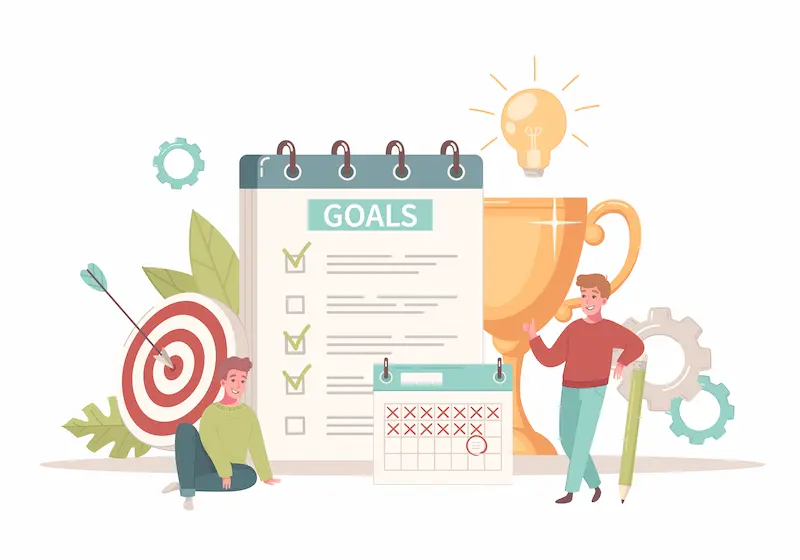
Start every partnership with documented goals. Both agencies must agree on what they are trying to achieve together, and those goals must be measurable and time-bound.
“Grow together” is not a goal. “Increase shared client revenue by 30% within twelve months through co-delivered SEO and development services” is.
Define Deliverables and Expectations
Every service, deliverable, timeline, and quality standard must be written down before collaboration begins.
Verbal agreements are insufficient, not because partners are dishonest, but because memory is selective and context changes quickly. A shared document accessible to both agencies removes ambiguity from day one.
Establish Measurable Success Metrics
Tie partnership success to concrete KPIs that both agencies can track independently and review together. Tracking core web vitals for enterprise websites and other performance indicators provides both agencies with a shared language for measuring what they deliver.
Create Transparent Communication Channels
Set up structured communication rituals, weekly standups, shared project channels, and clearly defined escalation protocols.
Both agencies should use a single, agreed-upon communication platform and enforce consistent participation from both sides.
Improve Reporting and Performance Tracking
Both partners should have equal access to performance data. Use shared dashboards and joint review sessions to maintain alignment.
Leveraging the best keyword research tools and shared analytics platforms ensures neither partner operates on assumptions or outdated information.
Define Roles and Responsibilities Early
Use a clear accountability matrix to define who does what from the first week of collaboration. Revisit this document whenever the partnership’s scope changes, not months after it has.
Clarify Ownership and Decision-Making Authority
Explicitly establish decision-making authority for client relationships, project management, and financial matters.
Both agencies must know exactly who has final authority over each type of decision, and that clarity must be documented, not just assumed.
Build Strong Partnership Contracts
A formal contract is non-negotiable in any professional agency partnership. It must cover the service scope, financial terms, intellectual property rights, client ownership, confidentiality, and dispute-resolution procedures.
Opting for a professional approach over an informal DIY arrangement always delivers better long-term outcomes when the stakes involve client relationships and revenue.
Include Service Level Agreements
Service level agreements define the minimum performance standards each agency must maintain. They create a clear baseline for accountability and provide an objective foundation for performance conversations when one party is not meeting its obligations.
Create Clear Exit Clauses and Risk Management Terms
Every partnership contract must include a well-defined exit clause. This should specify the conditions under which either party can terminate, the notice period required, how clients and data will be handled, and how outstanding financial obligations will be settled.
Risk management terms, covering liability, indemnification, and force majeure scenarios, protect both agencies from unexpected events. The effort invested in clear exit terms is rarely wasted.
Even the most successful partnerships eventually end. A clean, documented exit process prevents a healthy working relationship from dissolving into a legal dispute.
Conclusion
Agency partnership failure is preventable. Most partnerships do not collapse overnight. They deteriorate gradually through ignored warning signs, informal agreements, unclear expectations, and communication gaps that were never properly addressed.
The agencies that build lasting partnerships treat collaboration as a strategic commitment, not a convenience. They define goals before work begins, protect those goals with formal contracts, track performance openly with shared data, and resolve conflicts before they escalate into irreversible damage.
Choosing the right partners, establishing clear terms, maintaining honest communication, and revisiting agreements as circumstances evolve gives every agency partnership the structural foundation it needs to deliver real, lasting value.
The time you invest upfront in building the partnership correctly is always less than the cost of recovering from agency partnership failure after it has already occurred.
FAQs About Agency Partnership Failure
Why do most agency partnerships fail?
Most agency partnerships fail because of poor communication, unclear goals, weak accountability, and mismatched expectations. Financial disputes and a lack of transparency also create long-term conflicts.
What are the warning signs of a failing agency partnership?
Common warning signs include missed deadlines, poor communication, declining work quality, unresolved conflicts, and unclear responsibilities. Frequent disagreements over clients or revenue can also signal problems in the partnership.
How can agencies prevent partnership failure?
Agencies can prevent partnership failure by setting clear goals, defining responsibilities, creating transparent processes, and using strong contracts. Regular communication and performance reviews also help maintain healthy partnerships.
Why is communication important in agency partnerships?
Communication keeps both agencies aligned on goals, deliverables, timelines, and client expectations. Poor communication often leads to misunderstandings, delays, and trust issues, damaging the partnership.
How do legal agreements help agency partnerships?
Legal agreements define roles, payment terms, ownership rights, and exit conditions. They reduce confusion, prevent disputes, and protect both agencies if the partnership does not work out.