Running a WooCommerce store without a structured sales funnel is like driving without a GPS. You may have great products, solid traffic, and a clean store design, but if you’re not guiding visitors through a deliberate path to purchase, you’re leaving money on the table.
In 2026, building a high-converting WooCommerce sales funnel is no longer optional. It’s the difference between a store that scales and one that stagnates.
This guide walks you through every stage, from strategy to execution, so you can build a WooCommerce sales funnel that consistently turns visitors into buyers and buyers into repeat customers.
A WooCommerce sales funnel is a structured sequence that moves a visitor from first contact to completed purchase through defined stages: awareness, interest, decision, and action. Store owners build one by setting funnel goals, choosing a funnel strategy, configuring WooCommerce with funnel plugins, creating focused landing and checkout pages, and adding post-purchase email automation.
Key performance metrics include conversion rate, cart abandonment rate, average order value, and return on ad spend. Most funnel failures trace back to a complicated checkout process, no upsell sequence, or poor mobile experience.
Why Does a WooCommerce Sales Funnel Matter for Ecommerce Growth?
Before you start configuring plugins or running ads, you need to understand why funnel design matters. A well-structured funnel reduces friction, improves conversion rates, and maximizes revenue per visitor.
What Does a WooCommerce Sales Funnel Mean for Online Stores?
A WooCommerce sales funnel is a structured buyer journey. It moves a visitor through distinct stages, from awareness to purchase to post-sale engagement.
Instead of hoping someone lands on your product page and buys, you deliberately guide them through touchpoints that build trust, address objections, and make purchasing easy.
Most WooCommerce stores treat every visitor the same. A sales funnel lets you treat each visitor based on where they are in the buying decision.
Key Stages of a High-Converting E-Commerce Funnel
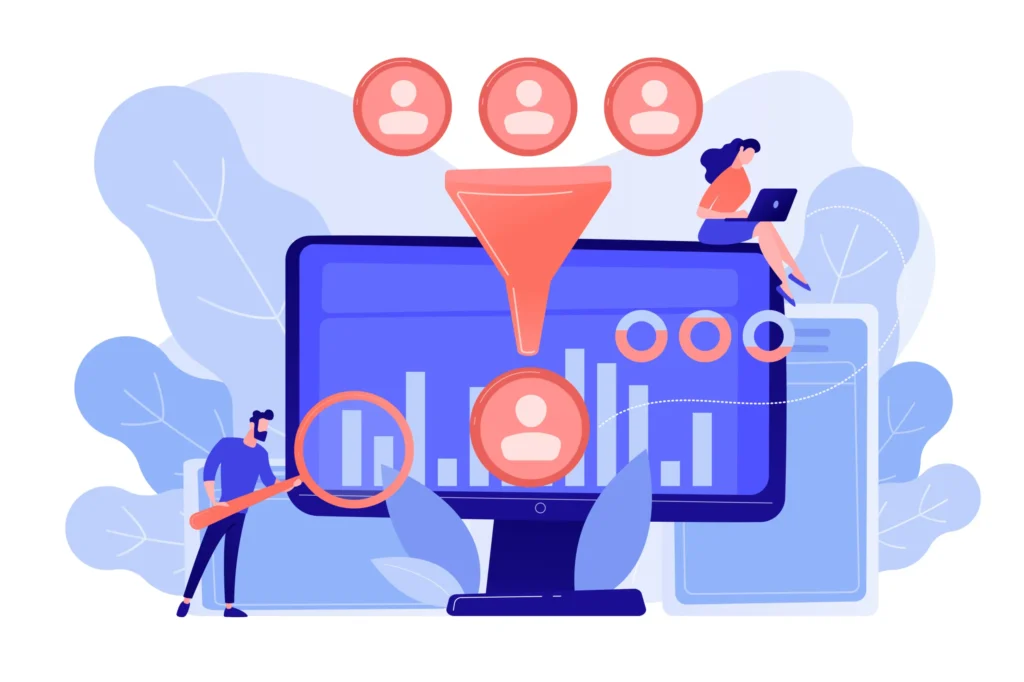
A standard WooCommerce sales funnel has four core stages:
- Awareness: The visitor discovers your store through search, social media, or paid ads.
- Interest: They engage with your content, browse products, or subscribe to your list.
- Decision: They evaluate your offer, compare prices, and weigh the value.
- Action: They complete a purchase and enter your post-sale sequence.
Some funnels add a fifth stage, Retention, where you focus on repeat purchases and loyalty. This stage is critical for growing customer lifetime value.
Common Reasons WooCommerce Funnels Fail to Convert
Most WooCommerce stores struggle to convert because of these preventable issues:
- No clear value proposition on the landing page
- Complicated or multi-step checkout that causes drop-off
- No upsell or cross-sell strategy to increase average order value
- Email sequences that are generic or poorly timed
- Poor mobile experience that frustrates buyers on smartphones
If you’re running a store and wondering why your traffic doesn’t translate to sales, these gaps are almost always the reason.
Why WooCommerce Store Owners Need Funnel Optimization in 2026?
Global ecommerce competition has intensified significantly. Customer acquisition costs have risen across Google Ads and Meta platforms. The only way to stay profitable is to extract more value from each visitor, and that requires a tightly optimized WooCommerce sales funnel.
Stores that have invested in funnel-building tools, tips to protect their e-commerce sites from hacking, and conversion-focused checkout experiences are outperforming those that rely solely on product quality.
How AI Search and User Intent Are Changing Ecommerce Funnels?
AI-powered search is changing how buyers find products. Google’s AI Overviews, ChatGPT search, and Perplexity are surfacing direct answers and product recommendations above traditional results. This means your WooCommerce sales funnel must be built with intent-first visibility in mind.
Understanding these shifts in AI SEO trends is essential for any store owner who wants to capture demand at the top of the funnel. Buyers no longer just search; they ask questions. Your funnel should answer those questions at every stage.
Build a WooCommerce Store That Drives More Sales
Launch, optimize, and scale your ecommerce business with expert WooCommerce development services tailored for higher conversions.
Benefits of Building a High-Converting WooCommerce Sales Funnel
Building a structured WooCommerce sales funnel delivers measurable results across every part of your business:
- Higher conversion rates. A funnel removes decision friction. Visitors who enter a guided path convert at significantly higher rates than those who browse without direction.
- Increased average order value. Strategic upsells, cross-sells, and order bumps inside the funnel push more revenue from each transaction without acquiring new customers.
- Lower customer acquisition cost. When your funnel converts more efficiently, you need less ad spend to hit revenue targets. Each marketing dollar works harder.
- Better customer retention. Post-sale email sequences and loyalty touchpoints keep customers coming back. Retention is far cheaper than acquisition.
- Scalable revenue growth. A funnel that converts predictably can be scaled with paid traffic. You know your numbers, so you can invest confidently.
Unlike standalone product pages, a well-designed hybrid store on WooCommerce with a connected funnel creates a sustainable revenue engine that works across every traffic source.
Steps to Build a High-Converting WooCommerce Sales Funnel
A well-structured WooCommerce sales funnel guides visitors from product discovery to checkout, improving conversions, customer retention, and overall ecommerce revenue.
Step 1: Define Your WooCommerce Funnel Goals and Target Audience
Start by getting specific. What do you want your funnel to achieve? Are you focused on first-time purchases, subscription sign-ups, or high-ticket product sales?
Next, define your buyer persona. Know their pain points, buying triggers, and objections. Use keyword research tools to understand what your audience is searching for at each stage of their journey.
The more precisely you understand your buyer, the more relevant your funnel messaging becomes.
Set measurable goals, target conversion rate, average order value, and acceptable customer acquisition cost before you build anything.
Step 2: Choose the Right WooCommerce Sales Funnel Strategy
Not all funnels are built the same. Choose a strategy that fits your product type and business model.
- Lead magnet funnel: Offer a free resource to capture email addresses. Nurture leads with automated sequences until they’re ready to buy.
- Product launch funnel: Drive urgency with time-limited offers, countdown timers, and launch-day email campaigns.
- Tripwire funnel: Offer a low-cost entry product to build trust, then upsell to higher-value items.
- Webinar or quiz funnel: Engage buyers with interactive content before presenting your offer.
If you’re comparing platforms and considering whether WooCommerce is the right fit, the Shopify vs WordPress comparison can help clarify which platform gives you more funnel-building flexibility.
WooCommerce wins for customization, but the right strategy must still be chosen deliberately.
Step 3: Set Up WooCommerce and Funnel Building Tools
Install WooCommerce on a fast, reliable WordPress host. Then add funnel-specific plugins:
- FunnelKit (formerly WooFunnels): Build checkout funnels, upsell sequences, and order bumps
- CartFlows: Design visual funnel flows with custom checkout pages
- Elementor or Divi: Build landing pages and funnel pages with drag-and-drop simplicity
Once your stack is in place, customize your WooCommerce dashboard to surface the funnel metrics that matter most, conversion rates, abandoned cart counts, and upsell acceptance rates.
Step 4: Create a High-Converting WooCommerce Landing Page
Your landing page is the entry point of your WooCommerce sales funnel. It must do one job: move the visitor to the next step.
Keep the page focused. One offer. One message. One call to action. Remove navigation links that let visitors exit the funnel before converting.
Elements of a high-converting landing page:
- A headline that speaks to the buyer’s desired outcome
- A concise value proposition above the fold
- Social proof testimonials, ratings, or trust badges
- A clear and prominent call to action
- Fast load speed to prevent drop-off
Consider using dynamic landing pages that personalize content based on the visitor’s source or search query. Personalized pages consistently outperform generic ones.
Step 5: Build an Optimized WooCommerce Checkout Experience
Checkout is where most funnels break down. The average cart abandonment rate hovers around 70%. Every unnecessary field, extra step, or payment friction point costs you sales.
Simplify your checkout by:
- Reducing form fields to only what’s necessary
- Enabling guest checkout alongside account creation
- Offering multiple payment options, including credit cards, PayPal, and buy-now-pay-later
Using a multi-step payment form in WordPress can improve completion rates by making the process feel less overwhelming. Break it into logical stages: contact, shipping, payment, and show a progress indicator.
Also, explore PayPal plugins for WordPress to expand payment options and reduce checkout abandonment.
Step 6: Add Upsells, Cross-Sells, and Order Bumps
Once a buyer decides to purchase, their wallet is already open. This is the best time to increase order value.
- Order bumps: Small add-on offers on the checkout page. Typically, a complementary item at a discounted price. These convert at 20–40% acceptance rates when relevant.
- One-click upsells: Post-purchase offers shown immediately after the buyer completes their order. No re-entering payment details. One click adds the item to their order.
- Cross-sells: Relevant product suggestions shown on the cart page or in confirmation emails.
Use WooCommerce’s built-in upsell and cross-sell fields, or use FunnelKit to build post-purchase upsell sequences. Carefully managing product variations in WooCommerce also helps prevent confusion at this stage.
Step 7: Create Automated Email Marketing Funnels
Email is still one of the highest-ROI channels in ecommerce. Build automated sequences for every stage of your WooCommerce sales funnel.
- Welcome sequence: Introduce new subscribers to your brand and guide them toward their first purchase.
- Abandoned cart recovery: Send 2–3 emails over 48 hours to recover buyers who left without purchasing. The first email should be sent within one hour of abandonment.
- Post-purchase sequence: Thank buyers, share order updates, offer a loyalty discount, and request a review.
- Win-back campaign: Re-engage customers who haven’t purchased in 60–90 days.
Integrate your email platform with WooCommerce using WordPress CRM plugins to segment customers by purchase history and behavior. Better segmentation means more relevant emails, higher open rates, click-through rates, and conversions.
Step 8: Drive Traffic to Your WooCommerce Sales Funnel
A funnel without traffic produces zero revenue. Build a multi-channel traffic strategy.
- SEO: Target high-intent keywords at every funnel stage. Use the right SEO tools to identify what buyers search for before they purchase. Build backlinks from authority sites in your niche to improve organic rankings.
- Paid search and Google Shopping: Run Google Ads targeting bottom-funnel keywords. Invest in Google Shopping feed optimization to ensure your products appear with accurate titles, images, and pricing.
- Social media: Deploy Facebook marketing strategies for ecommerce to build retargeting audiences and drive awareness-stage traffic into your funnel.
- Content marketing: Publish helpful content that addresses buyer questions. Strong content relevance builds topical authority and earns organic traffic that feeds your funnel.
Diversify your traffic channels. Dependence on a single source creates fragility. If one channel drops, your funnel should still receive enough traffic to sustain revenue.
Step 9: Optimize Your WooCommerce Funnel for Mobile Users
More than 70% of ecommerce traffic now comes from mobile devices. If your WooCommerce sales funnel isn’t optimized for mobile, you’re losing the majority of your potential buyers.
Understand the difference between a mobile site and a responsive site before you choose your design approach. Responsive design automatically adapts to any screen size and is the modern standard.
If your funnel pages aren’t displaying correctly on smaller screens, learn how to fix mobile view issues in WordPress before driving paid traffic. Issues like misaligned buttons, horizontal scrolling, and unreadable text directly damage your mobile conversion rate.
Use one of the fastest WordPress themes available to ensure your funnel pages load instantly on mobile networks. Page speed is especially critical on mobile; even a one-second delay can reduce conversions by 7%.
Step 10: Use A/B Testing and Analytics to Improve Funnel Performance
Building a WooCommerce sales funnel is never a one-time task. You must test, measure, and improve continuously.
Start by A/B testing your most impactful pages, the landing page and checkout page. Test one variable at a time: headline text, CTA button color, form layout, or trust badges.
Use Google Analytics 4 alongside WooCommerce’s built-in reports to track funnel performance. Monitor where visitors drop off. Address Core Web Vitals to ensure your funnel pages load quickly and meet Google’s performance standards.
If your organic traffic has dropped following algorithm changes, consider content pruning to remove or consolidate underperforming pages and redirect authority to your funnel entry points.
If your store is running slow and hurting bounce rates, diagnose the exact causes by reviewing why your WordPress site might be slow and fix them before scaling ad spend.
WooCommerce Sales Funnel Best Practices to Increase Conversions
Follow these proven practices to maximize performance from your WooCommerce sales funnel:
- Use scarcity and urgency wisely. Countdown timers and limited stock indicators work, but only when they’re genuine. Fake urgency erodes trust and damages long-term conversion rates.
- Build trust at every stage. Include SSL certificates, payment security badges, money-back guarantees, and customer reviews throughout your funnel, not just on the checkout page.
- Keep the path simple. Every extra click or decision point reduces conversion probability. Remove unnecessary steps, limit navigation, and guide buyers with a clear visual hierarchy.
- Segment your email list. Generic emails underperform. Segment buyers by product interest, purchase history, and engagement level to send relevant, timely messages.
- Test relentlessly. The most successful WooCommerce stores continuously test their funnels. Small improvements compound into large revenue gains over time.
- Protect your store. If your store handles sensitive customer data, understand your obligations under HIPAA and other data protection standards. Security issues can destroy trust and tank conversion rates overnight.
If you’re migrating from another platform and want to bring your funnel setup with you, a PrestaShop-to-WooCommerce or WiziShop-to-WooCommerce migration can give you full funnel control without starting from scratch.
WooCommerce Sales Funnel Metrics and KPIs You Should Track
Knowing which numbers to watch is what separates stores that grow from stores that guess. These are the core KPIs for your WooCommerce sales funnel.
Funnel Conversion Rate
This is the percentage of visitors who complete the desired action at each stage. Track it at the landing page, cart, and checkout levels separately. A landing page converting at 3–5% and a checkout converting at 65–80% are healthy benchmarks for most niches.
Cart Abandonment Rate
This measures how many shoppers added items to the cart but didn’t purchase. The global average is around 70%. Every percentage point you reduce through cart recovery emails and checkout optimization directly adds revenue.
Average Order Value
Average order value (AOV) is the mean transaction amount across all purchases. Upsells, cross-sells, and order bumps are designed to lift this metric. If your AOV increases by just $10 per order, and you process 500 orders per month, that’s $5,000 in additional monthly revenue.
Customer Acquisition Cost
Customer acquisition cost (CAC) measures how much you spend in marketing and ads to acquire one paying customer. As you optimize your WooCommerce sales funnel and improve conversion rates, your CAC decreases, even if your ad spend stays the same.
Customer Lifetime Value
Customer lifetime value (CLV) is the total revenue a customer generates over their relationship with your store. A high CLV justifies a higher CAC. Improving your post-purchase email sequences and loyalty programs directly increases CLV.
Return on Ad Spend for Ecommerce Funnels
Return on ad spend (ROAS) measures the revenue generated for every dollar invested in paid advertising. A well-optimized WooCommerce sales funnel increases ROAS by converting more of the traffic you’re already paying for. Aim for a ROAS of at least 3:1 as a baseline, with a target of 5:1 or higher as your funnel matures.
Conclusion
A high-converting WooCommerce sales funnel is built on four pillars: a clear strategy, a frictionless buyer experience, data-driven optimization, and consistent traffic from multiple channels.
The 10 steps in this guide give you a proven, actionable path from zero to a fully operational WooCommerce sales funnel. Start with your goals and audience. Then build a layer-by-layer landing page, checkout, upsells, email automation, and traffic.
Test everything. Improve constantly. The stores that win in 2026 are the ones that treat their funnel as a living system, not a one-time setup.
Your WooCommerce sales funnel is the engine of your ecommerce business. Build it right, optimize it relentlessly, and it will compound revenue month after month.
FAQs About WooCommerce Sales Funnel
What is a WooCommerce sales funnel?
A WooCommerce sales funnel is a step-by-step process that guides visitors from discovering your store to completing a purchase. It usually includes landing pages, product pages, checkout pages, upsells, and follow-up emails.
How do I create a high-converting WooCommerce sales funnel?
Start by defining your target audience and funnel goals. Create optimized landing pages, simplify the checkout process, add upsells, and use email automation. Track conversions and regularly improve weak funnel stages.
Which plugin is best for building a WooCommerce sales funnel?
Popular WooCommerce funnel plugins include FunnelKit, CartFlows, and WooFunnels. These tools help you create custom checkout pages, upsells, order bumps, and automated sales flows without coding.
How can I increase conversions in my WooCommerce funnel?
Improve page speed, use strong CTAs, add trust signals, and reduce checkout friction. You should also optimize your funnel for mobile users and run A/B tests to improve performance over time.
Why is my WooCommerce sales funnel not converting?
Poor landing page design, slow checkout pages, weak product copy, and a lack of trust signals often reduce conversions. Low-quality traffic and complicated checkout steps can also hurt funnel performance.