Most agencies have heard at least one version of the same warning: white-label digital services mean cutting corners, losing clients, or handing your brand over to strangers.
None of that is true.
But these myths are persistent, and they cost agencies real revenue every year. Agencies that believe them delay scaling, turn down profitable clients, and spend money on in-house hiring they could have avoided.
This post addresses 15 of the most common myths about white-label digital services, specifically through the lens of white-label WordPress, and shows what partnering with a mature provider actually looks like in practice.
White label digital services are specialized execution services such as WordPress development, SEO, WooCommerce builds, content creation, site maintenance, and design delivered by a dedicated partner under your agency’s brand.
Your agency owns the client relationship, sets the strategy, and controls pricing while the white label partner handles execution behind the scenes. Your client sees only one brand: yours.
15 White-Label Digital Services Myths Debunked
Agencies lose revenue every year by believing things about white-label that simply are not true. Here is the full picture, myth by myth.
blog-cta-mReady to Scale Your Agency Without Hiring?
Seahawk Media delivers white-label WordPress development, maintenance, WooCommerce, and SEO services under your agency’s brand. No contracts. No retainers. Expert execution from a team of 50+ WordPress specialists.
Myth 1: White-Label Services Mean Poor Quality
The reality: Quality is the foundation of any sustainable white-label business model. White-label providers depend on long-term agency partnerships, which require consistent, high-standard work on every project.
Strong white-label partners do not assign a single generalist to your projects and hope for the best. They use dedicated QA processes, specialist teams, and standardized delivery workflows that reduce variability and errors across every engagement.
At Seahawk, quality reviews happen before any deliverable leaves the team. WordPress projects go through code review, performance checks, and functionality testing before handoff. The result is work that consistently meets your agency’s standards and your client’s expectations.
Agency takeaway: If quality concerns are holding you back from white-label, that is a sign to evaluate partners more carefully, not to avoid the model entirely.
Myth 2: White-Label Will Weaken Your Brand Identity
The reality: White-labeling protects your brand because you control the client relationship, strategy, and positioning. Your partner handles execution, invisibly.
Your clients never see the white-label partner’s name, branding, or logo anywhere. Work is delivered under your agency’s identity, in line with your communication style and design preferences.
At Seahawk, we adapt to your workflows, not the other way around. Every project is branded to your agency’s standard. There are no traces of Seahawk in deliverables, documentation, or client-facing materials.
Agency takeaway: White-label strengthens your brand through consistent professional output, not the other way around.
Myth 3: White-Label is Only for Large Agencies
The reality: White-label digital services are a growth lever for agencies at every stage, and small and mid-sized agencies often benefit the most.
The global business process outsourcing market is projected to reach USD 695.77 billion by 2033, growing at a CAGR of 9.9%. A significant portion of that growth is being driven by small and mid-sized agencies using white-label to compete with larger firms.
Here is what white-label unlocks for smaller agencies:
- Expand service offerings without hiring specialists in every discipline
- Compete with larger agencies by delivering the same breadth of services
- Respond faster to client demand without worrying about capacity
- Maintain lean operations while scaling revenue
- Access senior WordPress expertise without paying a senior developer’s full-time salary
Agency takeaway: White-label is not about agency size. It is about strategic resource allocation and the growth trajectory you want to build.
Myth 4: White-Label Services Are Expensive
The reality: White-label provides high-quality execution at a fraction of in-house team costs, with better cost predictability and zero hiring risk.
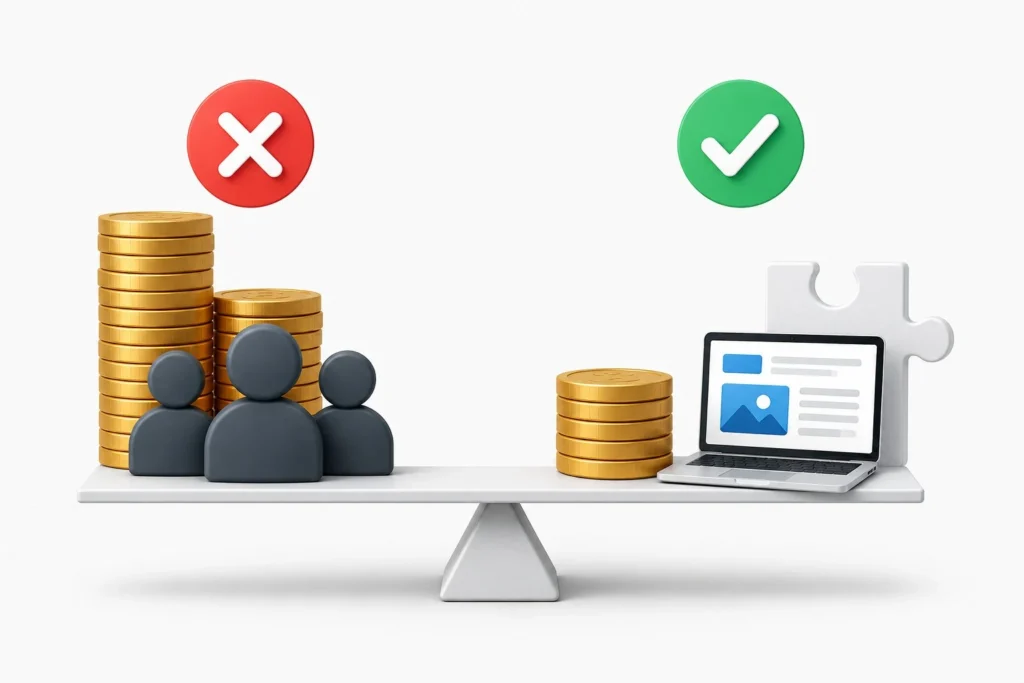
Consider what building an in-house WordPress capability actually costs:
- Average annual salary for a senior WordPress developer: $85,000 to $110,000
- Employer taxes, benefits, and payroll overhead: typically 1.25x to 1.4x base salary
- Recruitment costs: often $10,000 to $20,000 per hire
- Onboarding and training time: 1 to 3 months before full productivity
- Management overhead and downtime between projects
White-label WordPress services from Seahawk start at $499 per project, with no long-term contracts, retainers, or minimum commitments. You pay for what you use, and you can scale up or pause as client demand changes.
Agency takeaway: White-label is not a cost. It is a fixed-rate growth investment that protects margins and removes financial risk from scaling.
Myth 5: White-Label Partners Will Steal Your Clients
The reality: This is one of the most persistent myths, and it has no basis in how mature white-label relationships actually function.
White-label providers have no interest in contacting or acquiring your clients. Their business model depends entirely on you, the agency. Their growth comes from keeping you satisfied, not from going around you.
Professional white-label partners also sign NDAs before engagements begin. At Seahawk, full confidentiality agreements are standard. We never communicate directly with your clients, and there is no trace of our involvement in any deliverables.
Agency takeaway: A reputable white-label partner treats your client relationships as untouchable. That invisibility is their core value proposition.
Myth 6: White-Label Limits Creativity
The reality: White-label creates more space for creativity, not less. When execution is handled externally, your team has more bandwidth for strategy, innovation, and high-value client consulting.
White-label specialists also bring fresh perspectives from working across many agencies and industries. A Seahawk developer working on their hundredth WordPress project brings pattern recognition and creative problem-solving that most in-house developers do not have the exposure to develop.
Your ideas and creative direction remain yours. White-label handles the execution so those ideas actually ship on time.
Agency takeaway: White-label does not constrain creativity. It removes the execution bottlenecks that prevent creative work from seeing the light of day.
Myth 7: White-Label Partners Lack Expertise
The reality: White-label partners specialize in specific disciplines and maintain teams of experts whose entire job is to stay current and skilled in one area.
A white-label WordPress team does nothing but WordPress, all day, every day. They are not splitting attention across campaigns, client calls, and admin tasks. That focus produces a depth of expertise that is difficult and expensive to replicate in a generalist in-house hire.
Seahawk’s team of 50+ WordPress experts has completed over 1,000 projects since 2016, across development, migration, WooCommerce, speed optimization, and maintenance. That track record represents a level of collective expertise most agencies will not build in-house.
Agency takeaway: White-label partners deliver concentrated specialization that would be expensive and logistically complex to replicate internally.
Myth 8: White-Label Means No Accountability
The reality: Accountability is fundamental to white-label partnerships. Reliable providers build their entire business on repeat agency relationships, and repeat relationships require consistent accountability.
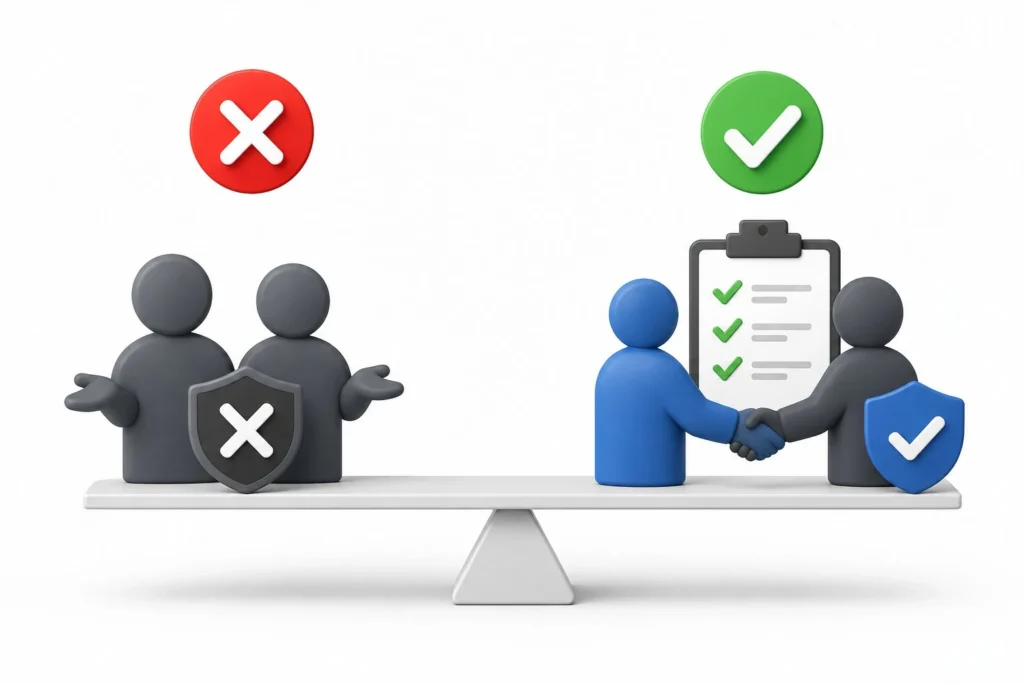
Here is how mature white-label providers like Seahawk maintain it:
- Service agreements: Detailed scope documentation with defined deliverables, timelines, and acceptance criteria
- Dedicated project managers: A named point of contact who tracks progress and owns communication
- Regular updates: Proactive status reports, not reactive responses to agency inquiries
- Performance metrics: Clear KPIs tracked and reported throughout the engagement
- Feedback loops: Structured processes for incorporating revision requests and improving future delivery
Agency takeaway: Strong white-label partners make accountability a competitive advantage. Look for dedicated project management and clear SLAs when evaluating providers.
Myth 9: White-Label Services Are Not Flexible
The reality: White-label services are specifically designed to flex with your agency’s demand, scaling up for busy periods and pulling back when things are quiet, without the friction of in-house hiring or layoffs.
At Seahawk, agencies can:
- Add or pause services month-to-month without long-term commitments
- Scale up delivery capacity for large client launches without recruiting
- Mix and match service types (development, SEO, maintenance) based on the current pipeline
- Onboard new project types quickly without internal training investments
In-house teams, by contrast, carry fixed costs regardless of how much work is coming in. White-label is built to move with your business rhythm.
Agency takeaway: White-label flexibility lets you respond to opportunities and challenges faster than in-house capacity ever will.
Myth 10: White-Label Offers No Customization
The reality: White-label partners customize services to match your branding, workflows, and business objectives. The entire value of the model depends on work that feels like it came from your team.
Areas of customization at Seahawk include:
- Brand alignment: All deliverables follow your visual identity, voice, and standards
- Workflow integration: We adapt to your project management tools, approval processes, and communication preferences
- Reporting formats: Custom reporting templates that match how you present results to clients
- Service configuration: Deliverables scoped to specific client needs, industries, and project sizes
- Development standards: Code and build standards set to your agency’s specifications
Agency takeaway: White-label customization is what makes the model viable. A provider who cannot adapt to your workflow is a vendor, not a partner.
Myth 11: White-Label Raises Privacy and Transparency Risks
The reality: Privacy protection and full transparency are non-negotiable operational standards for any serious white-label provider. Confidentiality is not a courtesy; it is the product.
Here is how Seahawk protects client privacy in every engagement:
- NDAs are signed before any work begins
- No trace of Seahawk branding appears in code, documentation, or client-facing materials
- Client data is accessed only on a need-to-know basis with strict access controls
- Communication with your clients never happens without your explicit direction
- All project files and assets are delivered under your agency’s name
Agency takeaway: Before signing with any white-label partner, ask about their NDA process and confirm they have clear data security protocols. A mature provider will have both ready before you ask.
Myth 12: White-Label WordPress Sites All Look the Same
The reality: White Label WordPress Development is not template dumping. A skilled white-label partner builds to your design specifications, your client’s brand, and your agency’s code standards. The output should be indistinguishable from that of a senior in-house developer.
Generic-looking sites are a reflection of vague briefs and low-bar providers, not a characteristic of the white-label model itself. The agencies that get consistent, polished WordPress builds from white-label partners are the ones who treat their partner like an extension of their team, sharing brand guidelines, design references, and clear scope documentation upfront.
At Seahawk, every WordPress project is built to the agency’s exact specifications. Custom themes, custom plugins, bespoke layouts, and pixel-perfect design implementations are standard, not exceptions.
Agency takeaway: White-label quality mirrors the quality of the brief and the partner. Vague instructions produce generic results. Clear briefs and a strong partner produce builds that your clients will brag about.
Myth 13: You Lose Control Over the Project When You Use White-Label
The reality: You retain complete control. You set the scope, approve the work, manage the client relationship, and determine the timeline. The white-label partner executes within the boundaries you define.
This is structurally different from handing a project to a freelancer and hoping for the best. Mature white-label providers like Seahawk operate within your project management workflow, provide regular status updates through your preferred tools (Slack, Asana, ClickUp), and require your sign-off before any deliverable is finalized.
You are not stepping back from the project. You are redirecting your effort from execution to oversight and strategy, where your highest-value work already happens.
Agency takeaway: White-label shifts where your time goes, from doing the work to directing it. That shift is what makes scaling possible.
Myth 14: White-Label Partnerships Take Too Long to Set Up
The reality: Onboarding with a mature white-label partner is significantly faster than hiring, which typically takes 6 to 12 weeks from job posting to productive output. A well-run white-label partner can be operational on your first project within days.
At Seahawk, new agency partners go through a streamlined onboarding process: scope alignment, workflow setup, and communication channel configuration, typically completed within one business week. From there, project intake follows your existing process, and delivery begins without a learning curve that costs you client confidence.
Speed of onboarding is something to verify when evaluating providers. Ask directly: how quickly can we get our first project started?
Agency takeaway: White-label removes the biggest bottleneck in agency scaling. There is no 60-day hiring timeline, no probation period, and no ramp-up months before you see productive output.
Myth 15: White-Label is Only Useful for Overflow Work
The reality: The agencies getting the most out of white-label are not using it as a safety valve for busy periods. They are using it as their primary delivery infrastructure for entire service lines.
Many successful agencies are built on a model in which strategy, client management, and account growth are handled in-house, while technical execution is delivered through a white-label partner. This is not cutting corners. It is operational clarity. It keeps the agency’s fixed costs low, its margins high, and its delivery quality consistent regardless of team size.
White-label works equally well for one-off projects, retainer-based service lines, and recurring maintenance programs. The model adapts to how your agency operates, not the other way around.
Agency takeaway: White-label is not a backup plan. For the agencies using it most effectively, it is the plan.
What to Look for in a White-Label Digital Services Partner
Not every white-label provider is built the same. When evaluating options, prioritize these criteria:

- Process maturity: Do they have documented workflows, QA protocols, and defined acceptance criteria?
- Track record: Can they show completed projects in your service area with verifiable outcomes?
- Communication infrastructure: Do they use structured project management tools and offer a dedicated point of contact?
- Scalability: Can they handle volume increases without compromising delivery speed or quality?
- Confidentiality standards: Are NDAs standard, and is their brand entirely invisible in deliverables?
- Flexibility: Can you scale up, pause, or adjust services without penalties or long-term lock-in?
Seahawk has been partnering with agencies, hosting companies, and web professionals since 2016. Our white-label WordPress services cover development, WooCommerce, migration, maintenance, SEO, and ongoing site care, all delivered under your brand with full confidentiality.
Frequently Asked Questions About White-Label Digital Services
What are white-label digital services?
White-label digital services are specialized execution services delivered by a third-party partner under your agency’s brand. The partner handles work such as WordPress development, SEO, content creation, and maintenance, while your agency maintains the client relationship and branding. Your clients never know the work was delivered by an external team.
Are white-label digital services of good quality?
Yes, when you partner with a mature, process-driven provider. White-label agencies depend on long-term repeat partnerships, which require consistently high-quality delivery. Strong providers use dedicated QA processes, specialist teams, and standardized workflows to maintain quality at scale.
How is white-label different from outsourcing?
White-label services are delivered entirely under your brand with complete partner invisibility. Traditional outsourcing is often transactional, project-based, and may involve visible third-party branding. White-label partners operate as a seamless extension of your team, following your workflows, signing NDAs, and never communicating directly with your clients.
Will a white-label partner steal my clients?
No. White-label providers have no business interest in acquiring your clients. Their revenue comes from your agency. Professional providers also sign NDAs before any engagement begins, and they never communicate with your clients without your direction.
Is white-label only for large agencies?
No. Small and mid-sized agencies often benefit most from white-label services because they allow them to offer a full range of services, compete with larger competitors, and scale revenue without adding headcount or fixed costs.
What white-label services does Seahawk offer?
Seahawk offers white-label WordPress development, custom website design, WooCommerce development, site migration, speed optimization, SEO, content, and ongoing WordPress maintenance and care, all delivered under your agency’s brand with full confidentiality and dedicated project management.